Medical Wigs for Children and Teens: A Parent's Guide
Medical wigs for children, also called pediatric cranial prostheses, are medical devices made for young patients with tender scalps and active lives. Unlike store wigs, these medical units use light, hand-tied parts like monofilament tops and lace fronts for a safe fit during chemo or alopecia care. These units are labeled as durable medical equipment, which means major insurance often pays for 80% to 100% of the total cost. NYC Medical Wigs supports this goal through a vision that no child under 18 should pay for her hair by 2026. Since 2000, groups like Children With Hair Loss have helped more than 12,000 young people get these tools. By choosing a custom unit, parents can help their children keep their own look and focus on getting well.
What Is a Pediatric Cranial Prosthesis?
A pediatric cranial prosthesis is a special medical hair piece made for kids and teens with hair loss. While many call it a "medical wig," it is not like a plain wig you might buy in a shop. These devices help kids who have health issues like alopecia or who are getting cancer treatment. In the medical world, these tools are listed as Durable Medical Equipment (DME). They are found under the HCPCS code A9282. This code helps families get payment from their health insurance plans. Because they are medical tools, they are built to last long and fit well. These systems are custom-fit to match the exact size of a child's head.
Medical Grade Rules
The gap between a medical wig and a store wig is huge. A cranial prosthesis is a medical tool used to protect the scalp and look like real hair. It must meet high rules for safety and grade. This grouping is why insurance often pays for 80% to 100% of the cost. At NYC Medical Wigs, we help parents through this work so every child gets help. Jamiese Drax has a good goal for 2026. She wants to make sure no child under 18 has to pay for their hair system out of pocket. This charity work ensures that cost is never a bar to a child's pride.
Smart Build for Kids
Kids are active, and their hair systems must keep up. Medical builds use smart ways to make the hair look real. A monofilament top lets the hair part in any way. It shows a real-looking skin tone below. Many wigs for kids are also hand-tied. This means each hair is tied to a soft mesh base by hand. This makes a light cap that lets air in and stays on well during school or play. The hand-tied method also gives the hair more real movement. You can find more facts in our cranial prosthesis guide.
Scalp Safety and Pride
Kids with hair loss often have soft and sore skin. Plain wigs often use rough fibers and heavy caps that can itch or cause sores. But medical wigs for kids use hypoallergenic parts and soft grips. These are gentle on the skin and help the wig stay in place without harsh glue or tape. This level of comfort helps a child get back their normal look and feel good around friends. A secure fit means they can run and jump without worry. By picking a medical-grade device, parents give their child a strong and real-looking choice. This helps their pride and mood during a hard time.
Common Causes of Hair Loss in Children and Teens
Losing hair is a big life event for any young person. It can change how they see themselves and how they act with friends. When a child starts to lose hair, the first step for most parents is to find the cause. Knowing the reason helps you choose the best care. Many families in the area look for medical wigs for children to help their kids feel more at ease during this time.
Alopecia Areata and Autoimmune Hair Loss
Alopecia areata is one of the most common reasons kids lose hair. This is an autoimmune issue. It means the body's defense system gets confused and attacks the hair roots. Often, this shows up as small, round bald spots. In some cases, it can lead to total hair loss on the head or body. About 6.8 million people in the United States live with this issue.
For children with this issue, hair loss can come and go without warning. This makes it hard to plan for. High-quality medical wigs for alopecia can provide a steady look. These pieces cover bald spots and help kids feel more like their peers at school. Experts at the National Institutes of Health track how these issues affect young people and their long-term health.
Chemotherapy and Radiation Treatment
Many children and teens lose hair as a side effect of cancer care. Chemotherapy and radiation are powerful tools to fight cancer, but they also affect hair cells. Most young patients start to see their hair fall out about 14 to 21 days after their first treatment. This shift can be a very scary part of the journey for both the child and the parent.
During this stage, a soft hair piece is a top need. We often help families find wigs for cancer patients that use 100% human hair. These are gentle on a tender scalp that may be sore from treatment. The National Cancer Institute notes that hair loss is a common side effect that can impact a child's mood and social life. A well-fitted piece can help them keep their sense of self during care.
Other Medical Conditions and Stress
There are several other health issues that can cause a child to lose hair. One common cause is tinea capitis, which is a fungal issue of the scalp. It is often called ringworm. Another cause is trichotillomania. This is an issue where a child feels a strong urge to pull out their own hair. Telogen effluvium is also seen in teens, often after a very stressful event or a high fever.
In many of these cases, the hair loss is not constant. However, the time it takes for hair to grow back can be long. A cranial prosthesis acts as a health tool to bridge that gap. Experts at the Mayo Clinic list these as some of the primary reasons for child hair loss. Having a realistic hair option helps a child focus on their health instead of their look.
When to Use a Medical Wig
A health wig becomes the right choice when hair loss starts to affect a child's daily life. If they feel shy, stop going to play dates, or lose their spark, it may be time for a fitting. Jamiese Drax and the team at NYC Medical Wigs focus on more than just hair. They aim to restore a sense of routine. These pieces are made to look and feel real, so kids can just be kids again.
Non-Profit Programs vs. Private Medical Wigs: What Parents Should Know
Choosing the right hair for your child is a big step. Parents often look at two main paths: free wigs from non-profit groups or private insurance coverage for medical wigs. Each path has its own rules for age, cost, and how much you can change the hair to fit your child's needs.
Free hair replacement programs
Non-profit groups give free human hair to children who need it for health reasons. Since the year 2000, the group Children With Hair Loss has given out more than 12,000 hair kits. These programs help kids and young adults under age 21 who face hair loss from chemo or alopecia. Some groups work with these larger non-profits to help children as young as seven years old.
While these groups provide a great service, the wait times can be long. This is because they rely on hair donations. The choice of hair style, length, and cap size may also be limited to what they have in stock. These programs are best for families who do not have health insurance. They also help those whose plans do not cover medical tools.
Private medical wig providers
A private provider like NYC Medical Wigs works differently. We treat a cranial prosthesis as a medical tool, not just a wig. This means we can often bill your health insurance directly to cover 80% to 100% of the cost. Unlike non-profits, private providers offer full custom options. You can choose the exact hair color, texture, and fit that works best for your child.
Private shops also tend to have faster service. You can book a visit in person at a showroom or talk to a specialist online. This is helpful for kids starting chemo who need hair quickly. Most private shops also help adults. Non-profits usually stop helping once a person turns 21.
Key differences for families
| Feature | Non-Profit Programs | Private Medical Wigs |
|---|---|---|
| Cost to Family | Free of charge | Insurance covers 80-100% |
| Age Limit | Usually under 21 | All ages eligible |
| Wait Times | Varies (can be months) | Fast (weeks or days) |
| Hair Options | Limited to stock | Full custom choices |
| Insurance Help | Not applicable | Direct billing support |
When you use a private provider, you get a high level of care for medical wigs for children. Specialists can fit the cap to a child's head size for a secure feel. They also provide care kits and styling to make sure the hair looks natural. This helps the hair stay in good shape for a long time.
Does Insurance Cover Medical Wigs for Children?
Many parents worry about the cost of fine hair for their kids. You might not know that most health plans cover medical wigs for children. These items are not just hair pieces. In the medical world, they are called cranial prostheses. Since they are needed for health, most firms view them as medical tools. This means your plan may pay for most or all of the cost.
Major Plans and Coverage Levels
Most large health groups pay 80% to 100% for a cranial prosthesis. This includes plans from Blue Cross Blue Shield, Aetna, Cigna, and United Healthcare. We also work with Medicare and Medicaid to help families get the care they need. These gains apply to children with hair loss from cancer care or health issues. For example, alopecia areata affects about 6.8 million people in the US, including many young children and teens.
To use these gains, you need a script from your child's doctor. The doctor must use the term cranial prosthesis and include the HCPCS code A9282. This small fact helps the firm know the unit is for a medical need. It is not for fashion. By using the right terms, we help you get the best pay. This keeps your costs low so you can focus on your child's health.
Direct Billing for Families
Many wig shops ask parents to pay the full price first. Then, you have to wait for the firm to pay you back. This can be hard for a family. At NYC Medical Wigs, we use a direct billing model. We bill your firm directly for the part they cover. This means you do not have to pay thousands of dollars upfront. Our medical wig buyer's guide shows that these units can cost from $375 to $4,846.
If there is a cost that your plan does not cover, you have options. You can use your FSA or HSA funds to pay for the rest. We also offer CareCredit to help make the payments fit your budget. Our goal is to make sure every child has access to top hair. You can start with a free insurance consultation to see what your plan covers. We handle the forms for you to make the path easy.
A Vision for Zero Costs
Jamiese Drax founded NYC Medical Wigs in 2015 with a clear goal. She wants to ensure that no child under 18 pays for her hair by the year 2026. This giving goal drives our work with every family. We search for every way to lower your costs. We know that hair loss is hard for a child. It can affect their mood and how they feel at school. Getting a real hair piece helps them feel at ease during a tough time.
We offer a private space for your child to try on styles. You can visit our shop in Bayonne, New Jersey, or book a virtual visit. We treat each child with care and heart. We want to help them find a look they love. By using your plans, you can get a luxury hair piece without the high price tag. This helps your child stay brave and strong as they move through their health path.
What to Expect During a Pediatric Medical Wig Fitting
Special care for your child
When a child loses hair, the path to a new look should be kind and calm. At NYC Medical Wigs, Jamiese Drax and her team give families a private space to talk. We make sure kids feel safe and heard from the very first day. Our 2026 goal is to ensure that no child under age 18 has to pay for their hair out of pocket.
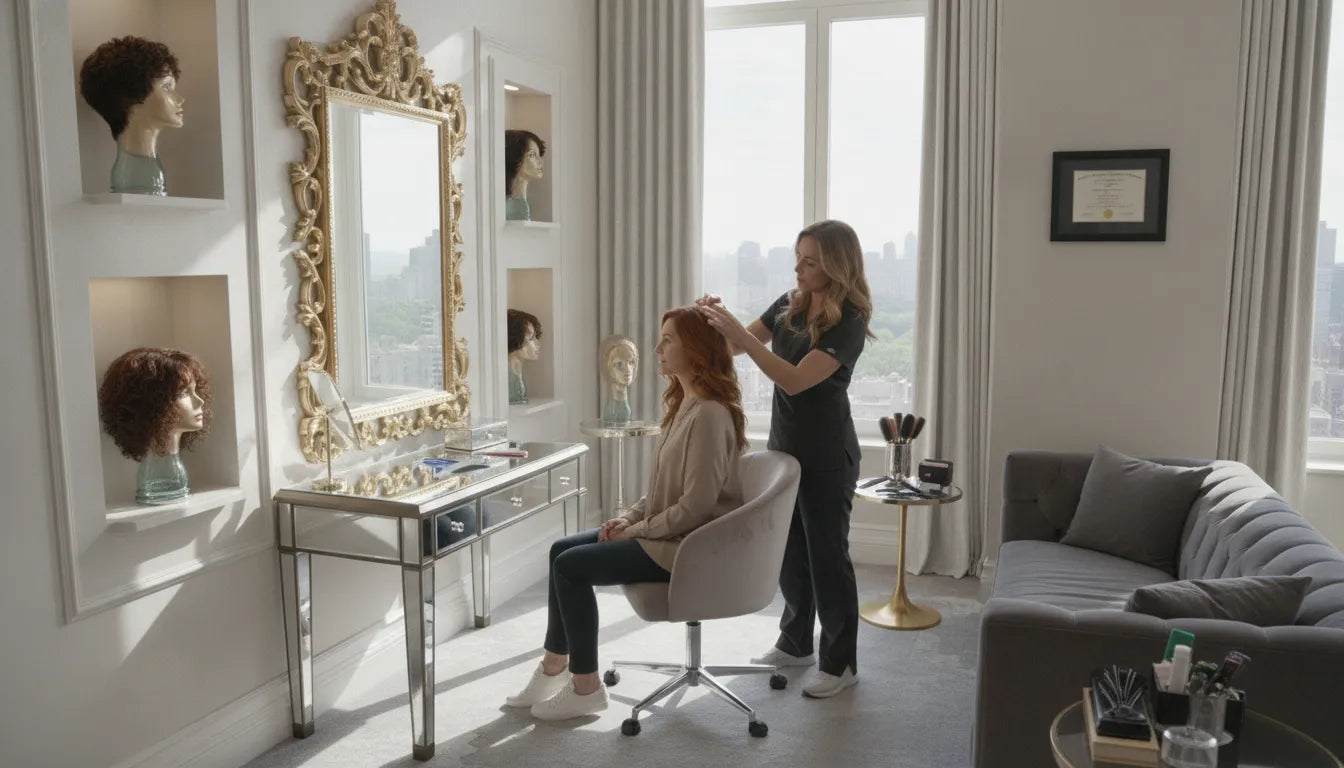
We offer many ways to meet. You can come to our shop in Bayonne, New Jersey, or book a video call from home. For kids getting care in a ward, we can come to the hospital or your house. You can schedule a consultation to start this process. We want to help in the way that works best for your family.
A fit that feels right
During the meeting, we talk about why your child is losing hair. Many kids face hair loss from chemotherapy, alopecia, or other health issues. Other causes include tinea capitis, trichotillomania, and telogen effluvium. We use these facts to find a medical wig that will protect their scalp. Many families use Medicaid to help pay for these items. You can also read our medical wig buyer's guide to learn more about how these devices work.
We take time to find the right head size. Most kids need a petite or child-sized cap so the hair stays in place while they play. We look for making types like lace fronts, monofilament tops, and hand-tied bases. These help the hair look natural and feel soft on the skin. We want every child to feel proud of how they look and be happy with their style.
- Book a meeting. You can see us in our Bayonne shop or meet us on a video call. We also visit homes and hospitals to help kids who cannot travel.
- Talk about hair loss. We learn why your child needs a medical wig. This helps us pick the best cap and hair for their skin and life.
- Get the right size. We measure your child's head to find a cap that fits well. A snug fit helps the wig stay on during school and play.
- Pick a style. Your child helps choose the hair color and length. We want them to love the look and feel like themselves in their new hair.
- Cut and style. Our pros cut the hair to match the style your child wants. We make sure the hair moves and looks just like real hair.
- Check the fit. We make small changes to the cap to make it feel great. We want to be sure there are no tight spots or itchy seams.
- Learn wig care. We show you and your child how to wash and brush the hair. Good care keeps the medical wig looking fresh for a long time.
Supporting Your Child Through Hair Loss
Hair loss can be a heavy weight for a child or teen to carry. For many young people, hair is a part of how they see themselves and their place in the world. When a child loses their hair from cancer treatment or alopecia, it often affects their self-esteem and social confidence. Seeing these changes can be hard for parents, but you can help your child find a sense of normalcy again.
Building Confidence with Medical Wigs
A well-fitted medical wig does more than cover hair loss. It can restore a child's sense of self during a tough time. High-quality medical wigs for alopecia and cancer are made to look and feel like natural hair. These medical devices use soft caps that will not hurt a sensitive scalp. When a teen feels good about how they look, they can focus on school and friends instead of their hair loss.
Choosing a style that matches their original hair can make the transition easier. Some children prefer a look that is exactly like their old hair, while others may want to try something new. Organizations like Children With Hair Loss have provided over 12,000 free human hair wigs to kids and young adults since 2000. These resources help ensure that every child can find a style that makes them feel brave and ready for the day.
Talking to Your Child About Hair Loss
Open and honest talk is the best way to support your child. Younger kids may only need simple facts, while teens often want more detail about what to expect. Use plain words to explain why their hair is falling out and what steps you will take together. Let them lead the way in choosing their head coverings. Whether they want a medical wig, a hat, or to go without a covering, giving them a choice helps them feel in control of their own body.
You may also want to look for local support groups or online forums for families. Sharing stories with others who face the same path can help both you and your child feel less alone. Organizations like the National Alopecia Areata Foundation offer tools to help kids cope with the social side of hair loss. These resources can give your child the skills to answer questions from peers with confidence.
A Vision for Every Child
At NYC Medical Wigs, we believe that no family should have to worry about the cost of a child's hair. Our founder, Jamiese Drax, has set a bold vision for the year 2026. We are working toward a goal where no child under the age of 18 pays for her hair. This commitment drives everything we do to support young patients and their families. By removing the cost barrier, we hope to give every child the chance to feel like themselves as they heal and grow.
Frequently Asked Questions
Does insurance cover medical wigs for children?
Many health plans pay for a medical wig for a child. This includes plans like Aetna, Cigna, and UnitedHealthcare. Most families can get 80 to 100 percent of the cost paid for by their plan. This applies when a doctor says the wig is a medical need. According to NYC Medical Wigs, parents often pay only a small fee for these units.
What is the difference between a pediatric cranial prosthesis and a standard wig?
A pediatric cranial prosthesis is a medical device for children with hair loss. It uses a soft base and hand-tied hair to protect a child's skin. These units look more real than standard wigs. They also have a special code for health billing. This code helps parents get the cost paid for by their health plan. A standard wig is for fun or fashion and does not have this medical code.
When does hair loss start for children during chemotherapy?
Hair loss usually starts two to three weeks after the first treatment begins. Some children lose hair in small clumps. Others may see their hair thin out slowly. Every child has a different path during their care. It is a good idea to book a wig fitting early. This helps a child feel ready for the change. It also makes sure the new hair is ready before the old hair is gone.
Can I use an HSA or FSA to pay for a child's medical wig?
You can use money from a Health Savings Account or a Flexible Spending Account for a medical wig. These funds can pay for a cranial prosthesis because it is a medical device. This is a smart way to use tax-free money for health costs. Some groups like Children With Hair Loss also provide free wigs to those who need them. This ensures every child can get the hair they need.
At what age can a child get a medical wig?
Medical wigs are available for children and teens of all ages. Small children can get a custom unit that fits their head size. NYC Medical Wigs has a goal that no child under 18 pays for their hair by the year 2026. This goal helps every young person get the care they need without a high cost. Expert fits ensure the wig stays in place during school and play.
Set up a free insurance meeting for your child's new wig
Waiting to handle your child's medical wig needs can hurt their social comfort and mental health while they cope with hair loss from expert doctors' care. Starting an insurance check now helps you avoid long wait times and makes sure your child has their custom hair piece ready for school soon. Our team handles the hard work of billing your insurance plan right now so your family can focus on health and healing instead of tough paperwork.
Ready to book a free medical insurance meeting for your child? Call (201) 892-6923 now. Talk to an expert to learn how insurance can cover the full cost of a new medical wig for your family.