
What to Expect at a Cranial Prosthesis Consultation
Experiencing medical hair loss from chemotherapy, radiation therapy, or conditions like alopecia areata can be an emotionally challenging journey. Securing an FDA-recognized medical hair replacement device that looks natural and feels secure is a vital step toward restoring your personal identity. Undergoing a professional cranial prosthesis consultation represents the first clinical step in selecting a custom medical wig designed to protect your sensitive scalp while maximizing your potential for direct insurance coverage.
Ready to restore your confidence? Schedule a free consultation today with our certified cranial prosthesis specialist to explore your medical wig options.
What Happens During a Cranial Prosthesis Consultation?
During a cranial prosthesis consultation, a certified clinical specialist conducts a precise scalp health evaluation, takes exact head measurements, and reviews your medical history. This comprehensive session determines your eligibility for direct medical insurance billing with carriers like Blue Cross Blue Shield, Aetna, Cigna. Or United Healthcare, ensuring your human hair medical wig is tailored to protect sensitive skin and replicate your natural style.
Comprehensive Clinical Scalp Evaluation
The cranial prosthesis consultation begins with an in-depth clinical evaluation of your scalp condition. This assessment is particularly crucial for individuals experiencing active medical treatments, which can leave the scalp tender, inflamed, or hyper-sensitive. Understanding the underlying cause of your hair loss, whether from an autoimmune condition or systemic clinical treatment, is essential. A cranial prosthesis specialist selects base materials that minimize skin irritation and support overall scalp comfort.
Our professional team evaluates the current state of your scalp, noting any localized areas of inflammation, dryness, or sensitivity. We analyze the progression of your hair loss to determine if a full medical wig or a partial scalp prosthesis is appropriate. Every detail of your lifestyle, from physical activity levels to professional requirements, is incorporated into a comprehensive clinical profile to guide the structural design of your device.
Direct Insurance Verification and Claims Support
One of the most valuable aspects of a professional cranial prosthesis consultation is navigating the complex financial landscape of medical insurance. Because a medical cranial prosthesis is categorized as a durable medical device, many health insurance plans offer partial or complete coverage. During your session, we initiate our direct insurance verification process to clarify your benefits under carriers like Blue Cross Blue Shield (BCBS), Aetna, Cigna, and United Healthcare.
We work directly with your insurance company to obtain pre-authorizations and clarify specific policy requirements, such as deductible thresholds and maximum allowable limits. Our dedicated staff manages the submission of necessary medical documentation, including prescriptions and letters of medical necessity, to minimize your administrative burden. This direct advocacy ensures you understand your coverage and potential out-of-pocket expenses before any manufacturing begins.
Showroom and Virtual Accessibility
To accommodate the varying clinical needs and physical mobility of our patients, we offer flexible consultation modalities. Patients residing in the New York, New Jersey, and Connecticut tri-state area can schedule a private, in-person consultation at our state-of-the-art showroom in Bayonne, New Jersey. This private showroom environment allows you to touch premium hair collections, inspect cap constructions under professional lighting, and undergo a precise, hands-on fitting session.
For patients located nationwide, or those undergoing active medical treatments that limit their mobility, we provide comprehensive, HIPAA-compliant virtual consultations. During a virtual session, a certified specialist guides you or your caregiver through the measurement and hair selection process using secure video conferencing. Additionally, we provide specialized mobile services, including hospital bedside and in-home consultations, ensuring every patient receives compassionate, expert-level care regardless of their physical circumstances.
How Do Specialists Assess Scalp Health and Select Breathable Materials?
Specialists assess scalp health by evaluating skin sensitivity, friction points, and the degree of hair loss caused by conditions like alopecia or chemotherapy. This clinical evaluation guides the selection of hypoallergenic, medical-grade base materials, including soft silk. Monofilament tops, and hand-tied lace fronts, that promote ventilation and protect delicate scalp tissue from irritation.
Analyzing Sensitive Scalp Tissue
Medical hair loss is frequently accompanied by heightened scalp sensitivity, itching, and dryness, particularly during active chemotherapy or radiation regimens. A standard fashion wig can exacerbate these symptoms due to rough fabrics, heavy machine stitching, and non-breathable synthetic fibers. During a clinical scalp assessment, our specialists closely examine your skin integrity to determine which hypoallergenic base materials will provide maximum protection and relief.
We assess the scalp's tolerance for friction and pressure, taking into account any dermatological changes associated with alopecia areata or cancer treatments. This meticulous evaluation ensures that your custom cranial prosthesis is constructed with materials that act as a gentle protective barrier, preventing irritation and maintaining skin health throughout your hair restoration journey.
Medical-Grade Cap Materials and Engineering
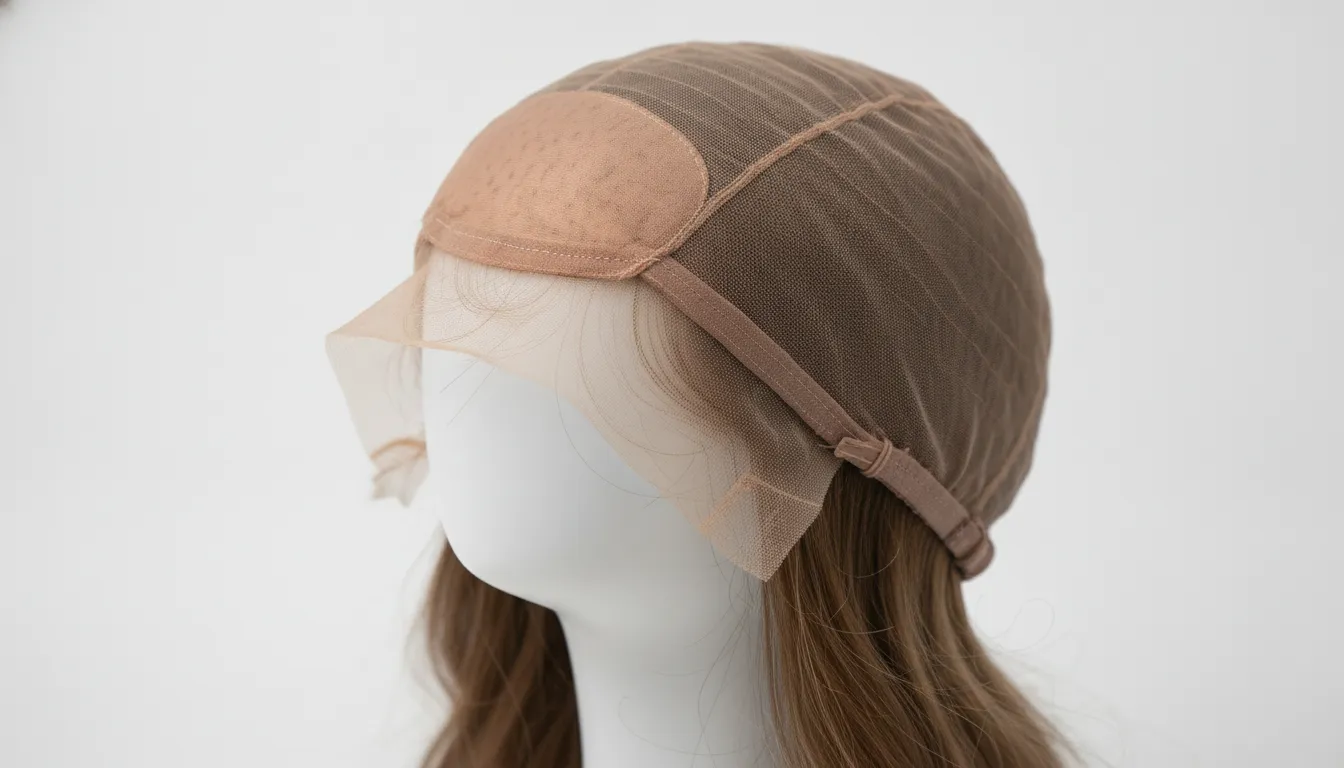
The core structural difference between standard fashion wigs and clinical cranial prostheses lies in the quality of the cap materials. Our medical devices utilize advanced, hypoallergenic bases engineered specifically for sensitive skin. We offer medical-grade monofilament tops that utilize an ultra-fine, sheer mesh material. Allowing your natural skin tone to show through while creating the optical illusion of natural hair growth directly from the scalp.
For patients experiencing complete hair loss, we feature specialized soft silk bases and hand-tied cap constructions. Hand-tying involves individually knotting each premium human hair strand onto a soft, flexible cap base. This eliminates the heavy, bulky wefts found in mass-market wigs, dramatically reducing cap weight and preventing abrasive friction against a bare scalp. Additionally, we integrate ultra-soft French lace fronts to establish an invisible, natural-looking hairline.
Promoting Airflow and Security Without Adhesives
Maintaining proper scalp temperature and airflow is essential for comfort and skin hygiene, especially during warm weather or physical activity. Our medical caps are engineered with breathable open-cap designs and specialized mesh materials that facilitate optimal ventilation, preventing heat accumulation and sweat buildup. This active airflow protection helps maintain a healthy scalp environment, which is particularly important for patients anticipating natural hair regrowth.
To ensure a secure, slip-resistant fit without the use of irritating glues, tapes, or tight elastic bands, we integrate medical-grade silicone grip zones into our cap designs. These hypoallergenic silicone panels gently adhere to the skin using natural body heat and surface tension, providing complete security and peace of mind during daily movement. This advanced engineering ensures you can lead an active lifestyle with absolute confidence in your prosthesis.
Why Are Exact Head Measurements Critical for a Secure Medical Fit?
Exact head measurements are critical because a cranial prosthesis is an FDA-recognized medical device that must fit securely without the use of harsh adhesives or tight bands. Taking six specific anatomical measurements ensures the cap is perfectly contoured to your head shape, eliminating friction and painful pressure points on a sensitive scalp.
Achieving a secure and comfortable fit is entirely dependent on precise anatomical mapping. Because our medical cranial prostheses are designed to be worn for extended periods on sensitive skin, a generic, mass-produced cap size is clinically inadequate. During your cranial prosthesis consultation, our specialist records six distinct head measurements to engineer a custom cap base that perfectly replicates the unique contours of your skull.
The specialist records six key anatomical data points to ensure a secure, customized fit. These six measurements include:
- Circumference: A soft tape is wrapped from the front hairline, behind the ears, and around the nape of the neck to establish total head size.
- Front-to-Back: Measuring from the center of the front hairline over the crown to the base of the skull at the nape.
- Ear-to-Ear over the Top: Measuring from the top of one ear over the crown to the top of the opposite ear.
- Temple-to-Temple: Measuring horizontally across the back of the head from temple to temple to locate sideburn tabs.
- Ear-to-Ear across Front: Measuring across the front hairline from ear to ear to ensure the cap sits flush against the forehead.
- Nape of the Neck: Measuring the width at the base of the skull to prevent the medical device from riding up or shifting.
By capturing these six anatomical dimensions, we can eliminate the pressure points that typically cause headaches, tension, and skin irritation. A perfectly sized cap base distributes the weight of the prosthesis evenly across the skull, allowing for effortless, secure daily wear. This level of customization ensures your medical device stays perfectly in place without relying on tight, abrasive elastic bands.
Looking for a secure, customized fit? Book your professional fitting session with NYC Medical Wigs today to ensure clinical comfort and security.
How Do You Select Premium Human Hair and Replicate Natural Textures?
Selecting premium human hair involves matching your natural hair density, curl pattern, and custom color using high-quality collections like the Tribeca 100% human hair or Brooklyn textured styles. Initiating this selection process before medical hair loss begins is highly recommended, as it allows your specialist to perfectly replicate your original style, density, and natural movement.
Copying Original Density and Curl Patterns
Restoring a patient's natural appearance requires a sophisticated understanding of hair physics, density, and texture. During your consultation, we carefully analyze your natural hair texture, identifying curl patterns, cuticle direction, and overall thickness. We utilize premium human hair sourced from our exclusive collections. Including the Tribeca 100% Human Hair line and our Brooklyn Textured styles, to ensure the prosthesis matches your biological hair perfectly.
Matching natural hair density is critical for achieving a realistic look. Standard wigs often feature excessive, unnatural density that immediately compromises the illusion of natural growth. Our specialists meticulously calibrate the hair density within your prosthesis to replicate a natural. Healthy volume that flatters your facial features and moves fluidly with your natural body motion. This ensures your medical hair replacement looks like your own hair, not a cosmetic addition.
Formulating Custom Color Blends
Natural hair is rarely a single, flat shade; it contains complex dimensions, highlights, lowlights, and subtle gradients. To achieve an authentic color match, our specialists analyze your natural hair under multi-spectrum lighting. We evaluate multi-tonal color combinations and custom blend individual human hair strands to match your specific shade, root depth, and dimensional color shifts.
We work with you to decide if you would like to replicate your exact pre-treatment hair color or explore a new, customized shade. Our master colorists can incorporate realistic grey percentages, root stretching, and hand-painted balayage techniques to ensure the hair looks incredibly vibrant, dimensional, and completely natural. Every strand of our premium human hair maintains its natural cuticle alignment, reflecting light in a healthy, radiant manner.
Why Proactive Consultation Before Hair Loss Is Recommended
While we can easily design a beautiful prosthesis at any stage of your hair loss journey. Scheduling your cranial prosthesis consultation before your hair loss begins is highly recommended. Conducting the consultation while your natural hair is fully present allows our clinical team to document your exact hair texture. Density, color distribution, and natural parting style in its baseline state. This provides an invaluable, living reference for our customization process.
Furthermore, taking measurements and selecting your prosthesis proactively helps ease the emotional stress of transitioning into hair loss. Having your custom medical device designed and ready before your treatment begins provides a profound sense of comfort. Security, and control over your physical appearance, helping you focus your energy entirely on your health and recovery.

What Are the Best Styling, Fitting, and Long-Term Aftercare Practices?
The best aftercare practices for a cranial prosthesis include custom dry cutting and personalization during your final fitting to ensure natural drape. Followed by specialized washing every two to three weeks. Storing the device on a specialized wig stand, using a wide-tooth comb from ends to roots. And avoiding excessive heat are essential to maintain the integrity of medical-grade hand-tied bases.
Custom Dry Cutting and Personalization
The final fitting of your cranial prosthesis is a highly personalized clinical session where the device is integrated seamlessly with your facial structure. While wearing your custom prosthesis, our specialist performs a detailed dry-cutting and styling technique. Cutting the hair while it is positioned on your head is essential. As human hair behaves differently when draped over the natural contours of the skull compared to a flat wig block.
Our specialists customize the fringe, adjust ear-tab placement, and carefully sculpt the hair to frame your face and suit your lifestyle. We teach you how to position the device correctly, secure the silicone grip zones, and style the hair using gentle techniques. This personalized fitting ensures your medical device not only feels incredibly comfortable but also represents an authentic reflection of your personal style and aesthetic preferences.
Gentle Washing and Maintenance Protocol
Because a cranial prosthesis is constructed from premium, delicate medical-grade materials, following a gentle washing protocol is vital to preserve its longevity. Unlike standard hair, human hair within a prosthesis does not receive natural scalp oils, meaning it requires specialized, sulfate-free hydrating shampoos and moisture-rich conditioners. We recommend washing your medical device approximately once every two to three weeks of daily wear.
To wash your device, gently submerge it in cool water infused with specialized medical wig shampoo. Allowing the cleanser to penetrate the base without vigorous scrubbing or rubbing, which can tangle the hand-tied knots. Rinse thoroughly with cool water, apply conditioner from mid-shaft to the ends, avoiding the delicate cap base to prevent knot slippage, and rinse again. Gently pat the device with a soft towel to remove excess water without wringing or twisting the hair.
Protecting the Medical Base and Cap Construction
Proper daily storage and handling are critical to protecting the structural integrity of your medical cap. When not in use, always store your prosthesis on a specialized open-air wig stand or mannequin head. This maintains the contoured shape of the cap base, allows the delicate mesh to breathe, and prevents dust accumulation. Avoid storing the device in direct sunlight, humid environments, or tight, enclosed spaces that can warp the materials.
When detangling your prosthesis, always utilize a professional wide-tooth comb or a specialized loop brush designed for medical hair pieces. Begin detangling gently at the ends of the hair, slowly working your way up to the roots to prevent tension on the delicate hand-tied knots. Avoid using high-heat styling tools, such as blow dryers, flat irons, or curling wands. Directly on the cap base or lace front, as excessive thermal heat can damage the fine monofilament mesh and degrade the hand-tied fibers.
How Do Medical Cranial Prostheses Compare to Standard Fashion Wigs?
Medical cranial prostheses differ from standard fashion wigs in their clinical-grade cap construction, hypoallergenic materials, and eligibility for health insurance coverage. While fashion wigs are mass-produced with synthetic materials for temporary styling. A cranial prosthesis is an FDA-recognized medical device specifically engineered to protect sensitive skin and qualify for 80% to 100% insurance reimbursement.
Hypoallergenic Bases vs. Mass-Market Materials
Understanding the fundamental distinction between a medical device and a cosmetic accessory is essential when selecting a hair restoration solution. Standard fashion wigs are mass-produced in factory settings, utilizing coarse synthetic fibers, heavy machine-stitched wefts, and thick elastic bands. These materials are non-breathable and can act as severe abrasives on a sensitive, bare scalp, leading to contact dermatitis, intense itching, and localized skin breakdown.
In contrast, a clinical cranial prosthesis is individually constructed using medical-grade, hypoallergenic materials. Every component of our medical caps, from the soft silk bases to the breathable monofilament mesh, is selected to promote skin health and prevent allergic reactions. By eliminating harsh chemicals, rough synthetic wefts, and heavy adhesives, a cranial prosthesis provides a soothing, therapeutic wear experience designed specifically for patients with complete hair loss.
FDA-Recognized Medical Devices vs. Cosmetic Accessories
The manufacturing and engineering of a cranial prosthesis must adhere to strict quality standards to qualify as an FDA-recognized medical device. These devices are classified under medical codes to ensure they meet the rigorous comfort, durability, and safety standards required for clinical applications. Every stitch, hand-tied knot, and silicone panel is designed to provide secure, irritation-free hair restoration for patients experiencing active medical treatments.
Standard fashion wigs are classified strictly as cosmetic accessories, exempt from medical manufacturing regulations. They lack the customized anatomical contours, breathable open-cap ventilation, and gentle, glue-free grip mechanisms essential for clinical comfort. Choosing a recognized medical device ensures your hair replacement solution is engineered specifically to support your physical healing, scalp hygiene, and overall medical well-being.
Direct Insurance Billing and Financial Accessibility
The clinical classification of a cranial prosthesis has a profound impact on its financial accessibility. Because it is recognized as a necessary medical device for hair restoration. Many health insurance policies allow for partial or complete reimbursement of the costs, frequently covering between 80% and 100% of the total investment. This essential financial support is completely unavailable for cosmetic fashion wigs, which must be purchased entirely out-of-pocket.
At NYC Medical Wigs, we streamline this financial process by providing direct insurance billing and comprehensive claims advocacy. We coordinate directly with your medical providers and insurance carriers to verify benefits, manage documentation, and submit claims on your behalf. This direct support removes the financial stress of purchasing a premium human hair prosthesis, making elevated, medical-grade quality accessible when you need it most.
| Feature. | Medical Cranial Prosthesis. | Standard Fashion Wig. |
|---|---|---|
| Primary Purpose. | Medical hair restoration. Serves patients with chemotherapy, alopecia, and autoimmune needs. | Cosmetic styling. Used for fashion and temporary trend changes. |
| Base Materials. | Hypoallergenic materials. Soft, breathable silk, monofilament, and hand-tied lace. | Coarse synthetic mesh. Thick, machine-made base that causes scalp friction. |
| Fit & Security. | Custom-sized fit. Contoured to six head measurements, secure without glue. | Generic cap sizes. Standard fit, often requiring adhesives or tight elastic. |
| Insurance Eligibility. | Highly accessible. Eligible for 80% to 100% health insurance reimbursement. | Personal expense. Not eligible for medical coverage or financial reimbursement. |
Frequently Asked Questions
Do I need a prescription for a cranial prosthesis?
Yes, to obtain health insurance coverage, you must have a medical prescription from a licensed healthcare provider, such as a dermatologist or oncologist. The prescription must explicitly specify a "cranial prosthesis" or "medical hair prosthesis" rather than a "wig" to satisfy insurer medical necessity guidelines.
How can I get my cranial prosthesis covered by health insurance?
To seek coverage, first obtain a prescription and a letter of medical necessity from your physician. Then, schedule a professional consultation with an experienced provider like NYC Medical Wigs, who will directly verify your benefits. Submit pre-authorization requests, and handle direct billing with carriers such as Blue Cross Blue Shield, Aetna, Cigna, or United Healthcare.
What medical conditions qualify for a cranial prosthesis?
Medical conditions that cause hair loss and qualify for a prosthesis include cancer treatments (chemotherapy and radiation therapy). Autoimmune conditions such as alopecia areata, alopecia totalis, and alopecia universalis, as well as trichotillomania, thyroid disorders, and lupus.
Can I schedule a virtual cranial prosthesis consultation?
Yes, NYC Medical Wigs provides comprehensive, HIPAA-compliant virtual consultations for patients nationwide. During a virtual session, a clinical specialist will guide you through the head-measuring process. Help you analyze your hair texture, and coordinate the direct insurance verification process from the comfort of your home.
Schedule a Free Consultation Today
Waiting to schedule your cranial prosthesis consultation can make the hair transition process feel significantly more overwhelming than necessary. By initiating your professional consultation early, you allow our clinical team to verify your insurance benefits sooner. Coordinate documentation with your medical providers, and ensure your custom medical device is fully prepared before your treatment begins. Taking this proactive step protects your sensitive scalp, secures maximum financial coverage. And provides you with the peace of mind needed to focus entirely on your health and recovery.
Ready to book? Call (201) 892-6923 to schedule a free consultation and let our team manage your insurance claims directly.