
Does Medicare Cover Cranial Prosthesis Costs?
Original Medicare does not generally cover a cranial prosthesis or medical wig for hair loss. For anyone asking, does Medicare cover cranial prosthesis care, the important distinction is plan type: a private Medicare Advantage plan may offer an additional benefit, but its coverage, documentation requirements, supplier rules, and limits must be verified before purchase.
Schedule a private benefits verification consultation with NYC Medical Wigs.
Does Medicare cover cranial prosthesis costs?
Original Medicare Part B covers certain prosthetic devices when they replace a body part or function and meet Medicare requirements. However, Medicare does not generally list cranial prostheses or wigs for medical hair loss as covered prosthetic devices. The official Medicare prosthetic devices guidance explains the broader Part B benefit and its conditions.
This distinction matters for people experiencing hair loss from chemotherapy, alopecia, or another diagnosed condition. A prescription can establish medical need, but it does not by itself make an item eligible for Original Medicare payment. Medicare.org also summarizes the current limits regarding Medicare and wigs for cancer patients.
Original Medicare and medical wigs
Original Medicare includes Part A and Part B. Neither part generally provides a benefit for a cranial prosthesis used for medical hair loss. Patients enrolled only in Original Medicare should plan carefully and ask about other possible resources before choosing a medical wig.
A cranial prosthesis is different from a fashion wig in purpose, fit, and construction. If this terminology is new, read what a medical wig is and how a medically focused consultation can support comfort, fit, and daily wear.
Medicare Advantage may differ
Medicare Advantage, also called Part C, is offered by private insurance companies approved by Medicare. These plans must provide Medicare-covered services and may include additional benefits. A particular plan may offer some help with a cranial prosthesis, but another plan from the same carrier may not.
Never assume that the word "prosthesis" guarantees approval. Ask the plan whether it recognizes a cranial prosthesis benefit, whether prior authorization applies, and whether a network or Medicare-enrolled supplier is required. To understand what a prior authorization request involves, read our guide to cranial prosthesis prior authorization. Also confirm the benefit limit, frequency, reimbursement process, and documents needed.
| Plan type | General position | What to verify |
|---|---|---|
| Original Medicare | Does not generally cover cranial prostheses | Other assistance or payment options |
| Medicare Advantage | May offer an additional benefit | Eligibility, limits, network, and claim rules |
| Medigap | Helps with certain Original Medicare cost sharing | It does not normally add a new non-Medicare benefit |

Why medical terminology matters
A cranial prosthesis is a medical wig intended for someone experiencing hair loss related to a medical condition or treatment. Using precise terminology helps a clinician, insurer, and specialist discuss the same medically focused item. It does not guarantee coverage, but it can prevent a claim from being evaluated only as a fashion purchase.
People managing alopecia may have different scalp sensitivity, coverage, and wear needs. Our guide to medical wigs for alopecia explains considerations for a supportive, natural-looking result without treating the selection as an ordinary retail wig purchase.
Medical device versus fashion hair
A medical wig may use features selected for comfort, security, and a natural appearance during treatment or ongoing hair loss. These may include carefully fitted caps, lace fronts, or monofilament tops. The right choice depends on the patient's scalp, diagnosis, preferences, and daily routine.
The term alone does not determine an insurer's decision. The plan's contract and medical policy control whether a benefit exists. A benefits representative can explain what wording, diagnosis information, or supplier credentials the plan expects.
The role of coding
Some private plans may reference a billing code when discussing cranial prostheses. Ask your carrier which code, if any, it requires rather than assuming one code works for every plan. The carrier should also confirm whether the code is eligible under your exact policy and whether authorization is required.
Advocacy and research continue around access to wigs for people with medical hair loss. A peer-reviewed article indexed by the National Library of Medicine discusses legislation and insurance coverage related to cranial prostheses for alopecia areata.
How to verify benefits before purchasing
Benefit verification should happen before you commit to a cranial prosthesis. Begin with the member services number on your insurance card. Have your plan name, member ID, diagnosis information, and prescription available if you already have one.
Describe the item as a prescribed cranial prosthesis for medically related hair loss. Ask the representative to check your exact benefit documents rather than provide a general answer about wigs. Record the date, representative's name, and call reference number for your files.
Questions to ask your plan
- Is a cranial prosthesis a covered benefit under my specific policy?
- Which diagnoses and documents are required?
- Do I need prior authorization before purchasing?
- Must I use an in-network or Medicare-enrolled supplier?
- Is there a dollar limit, frequency limit, deductible, or coinsurance?
- Will the plan reimburse me, or can the provider bill the plan?
- Which claim form, billing code, and filing deadline apply?
Request the answer in writing or ask where to find the applicable medical policy in your member portal. Benefits representatives can make mistakes, and a written policy gives you a clearer basis for preparing a claim or appeal.
Understand supplier and reimbursement rules
A plan may limit payment to certain suppliers or require the patient to pay first and request reimbursement. Confirm these rules before choosing a provider. If reimbursement is allowed, ask exactly what the invoice must show and where the completed claim must be sent.
For a step-by-step roadmap of the documents and timing carriers expect, see our guide to insurance reimbursement for your cranial prosthesis.
The National Alopecia Areata Foundation provides additional guidance on seeking wig reimbursement through health insurance. Its guidance is useful preparation, but your own plan's current policy remains the controlling source.
Get help reviewing your cranial prosthesis benefits before your private consultation.
What documentation should you gather?
A well-organized file can make benefits verification, a reimbursement request, or an appeal easier. Requirements vary, so ask your plan for a complete checklist. Do not purchase based only on a verbal suggestion that the item might be covered.
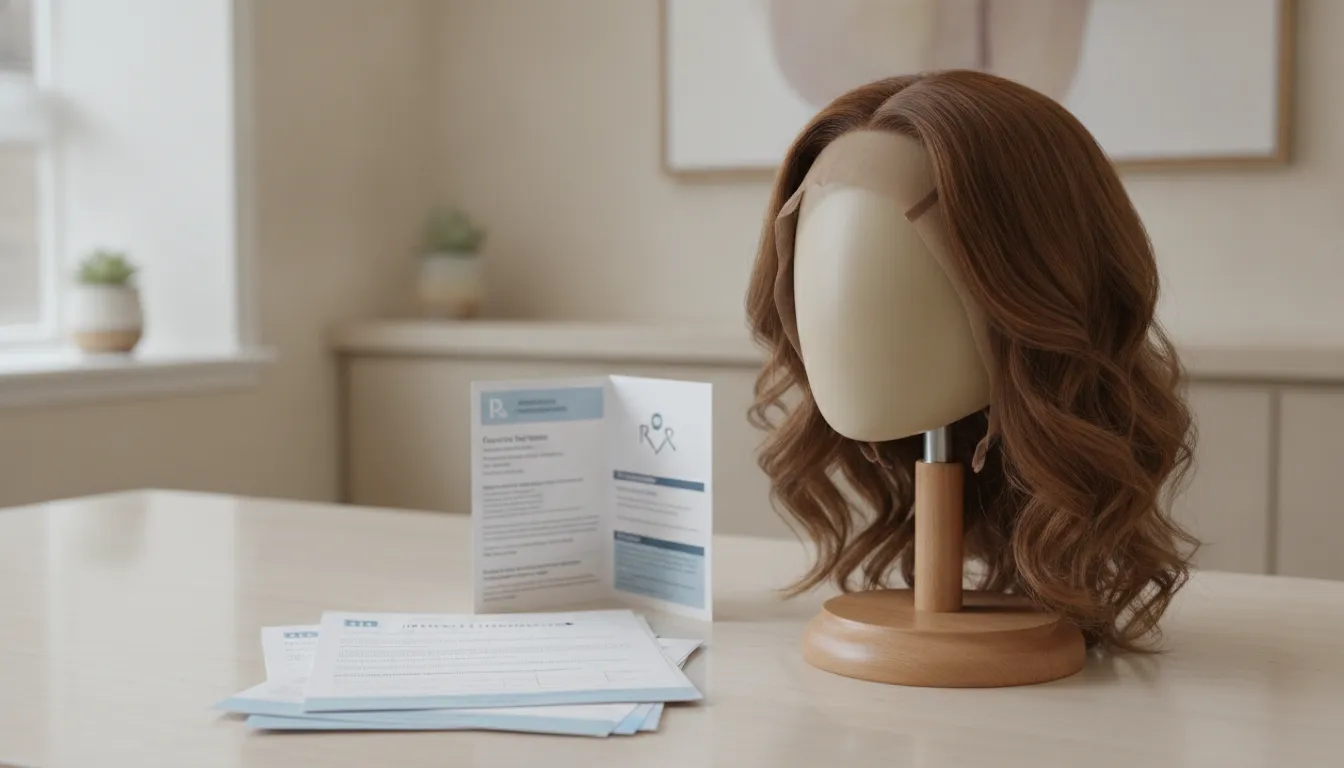
Prescription and diagnosis records
Ask the clinician treating the cause of your hair loss whether a cranial prosthesis is medically appropriate. If it is, request a prescription that says "cranial prosthesis" and includes the relevant diagnosis. Your plan may also request clinical notes or a separate letter of medical necessity.
Patients preparing for treatment may find it helpful to review the wig after chemotherapy guide. It explains practical timing and selection considerations while keeping the focus on medically related hair loss.
Invoice, payment, and claim records
If the plan accepts reimbursement claims, request an itemized invoice that includes the information the carrier requires. Keep proof of payment and a copy of every form you submit. Send documents through a trackable method or save the electronic submission confirmation.
- Prescription using the term "cranial prosthesis"
- Diagnosis information requested by the plan
- Letter of medical necessity, if required
- Prior authorization decision, if required
- Itemized invoice and proof of payment
- Completed member claim form
- Copies of benefit verification notes and correspondence
Letter of medical necessity
A carrier may ask the treating clinician for a letter explaining the diagnosis and why a cranial prosthesis is medically appropriate. The clinician should decide what medical details belong in that letter. A provider or wig specialist should not invent or alter clinical information.
To understand how a medical wig supports people facing treatment-related or condition-related hair loss, read why cranial prostheses and medical wigs matter.
How other insurance coverage may differ
Medicaid and private health plans follow different rules from Original Medicare. Medicaid benefits vary by state, while employer and individual private plans vary by contract. A carrier such as BCBS, Aetna, Cigna, or UnitedHealthcare can administer many plans with different cranial prosthesis policies.
Always verify the exact policy tied to your member ID. Do not rely on another patient's approval, even if that person has the same carrier. Benefit limits, networks, and documentation rules can differ between plans and may change. You can compare Medicaid cranial prosthesis coverage to see how a state-based program differs.
NYC Medical Wigs explains the broader process in its guide to having a medical wig covered by insurance. You can also see how Aetna covers cranial prostheses for a private-carrier perspective. Coverage is never guaranteed, but informed preparation can help you understand available options and avoid preventable claim issues.
What if your plan does not cover a medical wig?
If your plan denies coverage, request the denial reason and the policy language used to make the decision. A denial may be based on an exclusion, missing document, supplier rule, or lack of authorization. Understanding the stated reason helps determine whether an appeal is appropriate.
Consider an appeal
Follow the appeal instructions and deadline in the denial notice. Include only accurate, relevant records. If medical information is needed, ask your treating clinician to provide it. Keep copies of your appeal, supporting documents, and delivery confirmation.
An appeal does not guarantee approval. It gives the plan an opportunity to review the decision using the information and policy terms you provide. If your cranial prosthesis claim is denied, our guide walks through appeal deadlines, records, and the case you can build.
Ask about HSA, FSA, and tax treatment
A prescribed cranial prosthesis may qualify for payment from an HSA or FSA in some circumstances, but rules and documentation requirements vary. Ask the account administrator before purchasing. Keep your prescription, invoice, and receipt in case they are requested.
Medical expenses may also receive tax treatment in certain situations. Tax rules change and depend on individual circumstances, so consult a qualified tax professional rather than assuming the expense is deductible.
Explore patient support resources
Some nonprofit or community organizations offer assistance to people experiencing medical hair loss. Availability and eligibility vary. Ask your clinical care team, social worker, or condition-specific patient organization about reputable resources that may fit your circumstances.
How NYC Medical Wigs can help
NYC Medical Wigs provides private consultations for people experiencing hair loss from chemotherapy, alopecia, and other medical conditions. Jamiese Drax helps patients explore curated human-hair cranial prostheses, including lace-front and monofilament-top options, with attention to comfort, fit, and a natural appearance.
Our team can help you organize questions for your carrier and understand the documentation it requests. We cannot promise that Medicare Advantage, Medicaid, or a private plan will cover a cranial prosthesis. The insurer makes that decision under the terms of the patient's specific policy. Review our frequently asked questions for more guidance before your consultation.
A private consultation also gives you space to discuss your daily routine, scalp sensitivity, desired appearance, and care needs. The goal is an informed decision that supports your medical hair-loss journey, whether or not an insurance benefit is available.
Schedule your private cranial prosthesis benefits verification consultation with NYC Medical Wigs.
Book a private medical wig consultation today. Contact NYC Medical Wigs to arrange your consultation and confirm your Medicare benefits before purchase.
Frequently Asked Questions
Does Medicare cover a cranial prosthesis?
Original Medicare does not generally cover a cranial prosthesis or medical wig for hair loss. Some Medicare Advantage plans may offer an additional benefit, but coverage, supplier rules, limits, and required documents vary by plan. Contact your plan before purchasing to verify your specific benefits.
Are cranial prostheses tax-deductible?
A prescribed cranial prosthesis may qualify as a medical expense in some circumstances. Eligibility depends on current tax rules and your situation. Keep the prescription, itemized invoice, and proof of payment, then consult a qualified tax professional before claiming a deduction.
How much does a cranial prosthesis cost?
The cost of a cranial prosthesis varies based on materials, construction, customization, fit, and care needs. Ask for an itemized estimate during your consultation and verify any potential benefit with your insurer before purchasing.
How do I get a prescription for a cranial prosthesis?
Ask the clinician treating the condition causing your hair loss whether a cranial prosthesis is medically appropriate. If so, request a prescription that uses the term cranial prosthesis and includes the relevant diagnosis. Your insurance plan may require additional documentation.