How to Choose the Best Auburn Wig Human Hair
The search for the right hair prosthesis can feel overwhelming, but knowing what to look for makes all the difference. A high-quality medical wig is defined by its craftsmanship, from the source of the hair to the construction of the cap. For a truly natural look, nothing compares to 100% human hair, which moves and shines just like biological hair. When this is paired with a rich, multi-tonal auburn color, the result is stunning. This guide will walk you through the essential elements of a superior auburn wig human hair, helping you identify the features that ensure comfort, realism, and durability.
Key Takeaways
- Prioritize medical-grade construction for comfort and realism: A quality cranial prosthesis is more than its color; look for features like 100% human hair and a monofilament cap designed for sensitive scalps and a natural appearance.
- A professional consultation ensures the perfect result: A specialist helps you get precise measurements for a secure fit, match the auburn shade to your skin, and choose the right cap construction for your medical needs.
- Protect your investment with proper care and insurance: A simple routine of gentle washing and air drying preserves your prosthesis, and remember to get a doctor's prescription to begin the insurance reimbursement process.
Why Choose an Auburn Human Hair Cranial Prosthesis?
Choosing a cranial prosthesis is a deeply personal decision, and the goal is always to find a piece that feels like a true part of you. An auburn human hair cranial prosthesis is a beautiful option that combines the unmatched realism of human hair with a color that brings warmth and vibrancy to your look. When you're managing medical hair loss, you deserve a solution that not only looks completely natural but also helps you feel confident and comfortable in your own skin.
Human hair provides a look and feel that is simply unparalleled. It moves, shines, and can be styled just like your own hair would. Pairing this natural quality with the rich, dynamic tones of auburn can be a wonderful way to restore your sense of self. Auburn isn't just one color; it's a spectrum of shades, from light copper to deep mahogany, offering a perfect match for many different skin tones. It’s a choice that feels both classic and full of life, providing a sense of normalcy and beauty during a challenging time.
The Difference Between Human and Synthetic Hair
When selecting a medical wig, the distinction between human and synthetic hair is critical. A human hair cranial prosthesis offers the most natural appearance and feel because it is, after all, real hair. It falls and moves just as biological hair does, which is a key factor in creating a believable look. You can also care for it in the same way, using heat to style it, washing it, and even having it professionally colored to achieve your perfect shade. Modern medical wigs are designed with features like lace fronts and monofilament tops that mimic a real scalp, and these details are most effective when paired with high-quality human hair.
Why Auburn Complements So Many Skin Tones
One of the best things about auburn is its incredible versatility. The rich, warm undertones found in auburn shades can bring a beautiful glow to your complexion, whether your skin is fair, medium, or deep. For those with cooler skin tones, the contrast of a warm auburn can be absolutely stunning. For those with warmer or olive complexions, an auburn shade can harmonize beautifully, picking up the golden notes in your skin. Because auburn encompasses everything from bright copper to subtle, brownish reds, there is a shade to suit nearly everyone. Finding your ideal match is something we can explore together during a professional consultation.
Types of Auburn Cranial Prostheses
When you’re choosing a medical wig, the construction of the cap is just as important as the color and quality of the hair. The cap is the foundation of your cranial prosthesis, and its design directly impacts your comfort, the wig’s breathability, and how natural the hair appears at the scalp and hairline. This is especially critical if you are experiencing scalp sensitivity from chemotherapy or conditions like alopecia. Understanding the different cap types will help you find a prosthesis that not only looks beautiful but also feels comfortable enough for all-day wear.
The main types of cap constructions you’ll encounter are lace front, monofilament top, full lace, and machine-made. Each offers a unique set of benefits related to appearance, styling flexibility, and cost. At NYC Medical Wigs, we help you explore these options during your private cranial prosthesis consultation to find the perfect match for your needs and lifestyle. Let’s look at what makes each type different so you can feel more confident in your decision.
Lace Front
A lace front cranial prosthesis features a small, sheer panel of lace that runs along the front hairline. Hairs are individually hand-tied to this lace, creating an incredibly realistic hairline that looks like the hair is growing right out of your scalp. This feature is a game-changer for anyone who wants the freedom to style their hair away from their face without revealing the edge of the wig.
Because the transition from forehead to hairline is seamless, a lace front gives you confidence and styling versatility. It’s an excellent choice if you want the most natural look possible around your face. This construction is one of the most popular options for medical wigs because it provides a discreet and natural appearance where it matters most.
Monofilament Top
A monofilament top, or "mono-top," features a fine, transparent mesh material at the crown of the wig, with each hair individually hand-tied to the base. This meticulous construction creates the illusion of natural hair growth directly from the scalp. When you part the hair, the mesh allows your own scalp to show through, adding to the realistic effect.
This type of cap is exceptionally beneficial for those with sensitive scalps, as the material is soft and breathable. The individual knotting also allows for multi-directional parting, giving you the freedom to change your part and style your hair in different ways. A monofilament top provides a great balance of a natural look, comfort, and styling flexibility.
Full Lace
A full lace cranial prosthesis is constructed with a lace base that covers the entire head. Like the lace front and monofilament styles, every hair is individually hand-tied to the lace cap. This creates the most lightweight, breathable, and natural-looking foundation available. The full lace design allows for maximum styling versatility, including wearing your hair in high ponytails or updos, since the entire perimeter has a natural-looking edge.
Because they offer a completely seamless look from every angle, full lace prostheses are often considered a premium option. They are typically custom-fitted to ensure a secure and comfortable fit, making them an ideal solution for long-term wear and for those who want the ultimate in realism and styling freedom.
Machine-Made
Machine-made cranial prostheses, also known as wefted caps, are the most common and affordable type of wig construction. The hair is sewn onto wefts (strips of material) by a machine, and these wefts are then sewn together to create the shape of the cap. While they don't offer the same invisible hairline as a lace front or the scalp-like appearance of a monofilament top, modern machine-made wigs are designed for comfort and a natural look.
Many machine-made caps feature open wefting, which allows for good air circulation to keep your scalp cool. While styling is more limited (they usually have a pre-set part and style), they are a durable and budget-friendly solution for many patients seeking a reliable cranial prosthesis.
How to Spot a High-Quality Auburn Cranial Prosthesis
When you're experiencing medical hair loss, finding a cranial prosthesis that feels like you is the top priority. A high-quality auburn medical wig goes beyond just color; it’s about the craftsmanship that ensures a natural appearance, comfort, and security. Unlike a standard wig you might find online, a medical-grade hair prosthesis is specifically designed with a sensitive scalp in mind, using materials that are soft, breathable, and secure. The best units are virtually indistinguishable from natural hair, giving you the confidence to go about your day without a second thought about your hair.
Knowing what to look for can make all the difference in your experience. From the type of hair used to the way the cap is constructed, several key features separate a superior cranial prosthesis from the rest. As a cranial prosthesis specialist, I guide my clients through these details every day. My goal is to help you find a piece that not only looks beautiful but also meets your unique medical and personal needs. Let’s walk through the essential elements of a high-quality auburn cranial prosthesis so you feel empowered in your search.
Hair Source and Cap Construction
The foundation of a natural-looking cranial prosthesis is the quality of its materials. For the most realistic appearance and feel, 100% human hair is the best choice. It moves, reflects light, and can be styled just like your own hair would. Beyond the hair itself, the cap construction is critical for both comfort and a seamless look. Look for features like a lace front, which creates an invisible hairline, or a monofilament top. A monofilament design allows for multi-directional parting and gives the illusion of hair growing directly from the scalp, a key detail for a believable result and all-day comfort.
Color Consistency and Tone
A truly high-quality auburn cranial prosthesis will not have a flat, uniform color. Natural hair has subtle variations, with lighter and darker strands creating depth and dimension. A premium medical wig will replicate this with a multi-tonal dye process. When inspecting an auburn unit, look for these nuanced shades. A rich auburn should have hints of copper, chestnut, or even deep red woven throughout. This level of detail ensures the color looks vibrant and authentic rather than artificial. The goal is to find a piece that looks like it could be your own hair, full of life and dimension.
Density, Length, and Fit
The right density and fit are just as important as the hair quality. "Density" refers to how much hair is on the cap. A common mistake is choosing a unit that is too dense, which can look unnatural. A high-quality prosthesis will have a realistic density that mimics natural hair growth. Similarly, the fit is crucial for security and comfort, especially on a sensitive scalp. During a professional consultation, we take precise measurements to ensure your cranial prosthesis fits perfectly, preventing any slipping or irritation. This personalized approach guarantees your piece feels secure and comfortable all day long.
Is an Auburn Cranial Prosthesis Right for Medical Hair Loss?
Choosing a hair color is a deeply personal decision, but when you're experiencing medical hair loss, the construction of your hairpiece is just as important as the shade. A cranial prosthesis is more than just a wig; it's a medical device designed specifically for your needs. Unlike standard wigs, a cranial prosthesis is crafted to provide comfort, security, and a natural appearance for those with little to no hair. If you're drawn to the warmth of an auburn shade, rest assured that you can find a high-quality cranial prosthesis that not only looks beautiful but also supports your scalp's health during a sensitive time. The focus is always on creating a solution that helps you feel like yourself again.
Cranial Prosthesis vs. Standard Wig
When you're looking for a solution for medical hair loss, it's important to understand the difference between a cranial prosthesis and a standard wig. A cranial prosthesis is specifically designed for individuals with sensitive scalps due to conditions like alopecia or chemotherapy. These medical-grade wigs provide a more secure and comfortable fit because they are made with specialized materials and construction techniques. While a standard wig is designed to be worn over hair, a cranial prosthesis is built to sit comfortably and securely on a bare scalp, minimizing irritation and maximizing confidence. You can learn more about the specifics by reviewing some frequently asked questions about medical wigs.
Prioritizing Scalp Comfort and Breathability
One of the biggest concerns for anyone new to medical wigs is whether they will be hot or uncomfortable. Your comfort is the top priority. Modern cranial prostheses are engineered with lightweight, breathable materials that allow for consistent airflow to your scalp. This is essential for preventing irritation and ensuring you can wear your prosthesis all day without discomfort. The cap construction is designed to be soft and gentle, which is especially important if your scalp has become sensitive from medical treatments. A well-made prosthesis should feel like a seamless part of your life, not a burden.
Key Features for Medically-Related Hair Loss
When selecting a cranial prosthesis, there are specific features to look for that make a significant difference in comfort and appearance. Many high-quality options include a monofilament top, which creates the illusion of natural hair growth directly from the scalp and allows for versatile parting. An adjustable cap is another crucial feature, ensuring a snug and secure fit that you can customize. At NYC Medical Wigs, we help you find a prosthesis with the right combination of features for your needs. During a private consultation, we can explore different cap constructions and materials to find the perfect match for your lifestyle and medical requirements.
How to Find Your Perfect Fit and Auburn Shade
Finding a cranial prosthesis that feels like it was made just for you involves more than just picking a style. It’s about getting the fit, color, and details right so you can feel comfortable and confident. A perfect match ensures your medical wig is secure, looks completely natural, and doesn’t irritate a sensitive scalp. While you can take your own measurements, nothing replaces the expertise of a cranial prosthesis specialist. During a professional consultation, we can walk you through these choices, ensuring every detail is tailored to your needs and preferences.
A well-fitting cranial prosthesis is the foundation of a natural look. The cap should sit snugly against your scalp without feeling tight or slipping. The shade of auburn should harmonize with your skin’s undertones, creating a believable and flattering appearance. Finally, the length and density should align with your lifestyle and desired look. Getting these three elements right is the key to selecting a hair prosthesis that restores your sense of self. We’ll explore how to approach each of these important decisions below.
Measure Your Head for the Right Cap Size
To ensure a comfortable and secure fit for your medical wig, it’s essential to measure your head accurately. An ill-fitting cap can cause friction and discomfort, which is the last thing you need when dealing with a sensitive scalp from chemotherapy or alopecia. While cap sizes are often categorized as small, medium, or large, they correspond to specific measurements. The most important measurement is your head's circumference. To find it, wrap a soft measuring tape around your head, just above your ears and across your natural hairline. A cranial prosthesis specialist will take several other measurements, including from front to back and ear to ear, to guarantee a custom-like fit.
Match an Auburn Shade to Your Skin Tone
Choosing the right shade of auburn is crucial for a natural look that brightens your complexion. Auburn isn't a single color; it’s a spectrum of reddish-brown hues, from coppery ginger to deep mahogany. The best shade for you will complement your skin’s undertones. If you have warm undertones (your skin has a golden or peachy hue), look for auburns with more red or copper. If you have cool undertones (a pink or blueish hue), a deeper, browner auburn might be more flattering. Our high-quality cranial prostheses are made with human hair that has natural color dimension, preventing the flat, artificial look of lower-quality wigs.
Choose the Right Length and Density
Once you’ve found your size and shade, consider the length and density that will feel most like you. Length is a matter of personal style, whether you prefer a chic bob or long, flowing layers. Density refers to the amount of hair on the cap, which determines how full the wig looks. A 130% density offers a very natural, everyday fullness, while 150% or 180% provides more volume. For medical hair loss, many clients prefer a lighter density (130% to 150%) because it feels more lightweight and breathable on the scalp. A specialist can help you find the right balance that matches your previous hairstyle and suits your daily activities.
Common Myths About Auburn Human Hair Wigs
If you're new to medical wigs, you may have heard some things that give you pause. Many common ideas about wigs are based on outdated, low-quality products, not the sophisticated cranial prostheses available today. When you're already managing a health condition, the last thing you need is more anxiety. So, let's clear the air and separate fact from fiction.
A modern human hair cranial prosthesis is a highly specialized medical device designed for total comfort, security, and a completely natural appearance. The craftsmanship and materials used are worlds apart from standard wigs you might see in a beauty supply store. Understanding the truth about these pieces can help you feel more confident and empowered in your decision. Let's walk through a few common myths about human hair wigs and explain why they don't apply to a high-quality auburn cranial prosthesis.
Myth: They Don't Look Natural
This is often the number one concern for anyone experiencing medical hair loss, and it's completely valid. The great news is that it's also completely untrue for a well-made cranial prosthesis. These medical wigs are meticulously designed to be undetectable. Features like a lace front create a seamless, invisible hairline, while a monofilament top gives the appearance of hair growing directly from your scalp. This allows for multi-directional parting, so you can change your part just as you would with your own hair. Because they are made from 100% human hair, these prostheses move and reflect light naturally, ensuring your wig looks like your hair, not just a wig.
Myth: They're Too Hard to Maintain
While a human hair cranial prosthesis requires a different care routine than a synthetic one, the idea that it's "too hard" is a definite myth. It's more accurate to think of it as learning to care for a new type of hair. The process is very manageable once you have the right products and techniques. During a professional consultation, your specialist will provide you with detailed instructions on how to wash, condition, and store your wig to keep it looking its best. Following a simple routine helps protect your investment and ensures the auburn color stays vibrant and the hair remains soft and tangle-free. It quickly becomes a normal part of your self-care.
Myth: You Can't Style Them
This myth couldn't be further from the truth. In fact, styling versatility is one of the biggest benefits of choosing a human hair cranial prosthesis. Unlike most synthetic wigs, a human hair unit can be styled using low-heat tools. You can use a curling iron to add soft waves, a flat iron to create a sleek look, or a blow dryer to achieve more volume. This freedom allows you to change your hairstyle to match your mood or the occasion, helping you regain a sense of normalcy and personal expression. The ability to style your hair is an important part of feeling like yourself, and a human hair prosthesis gives you that power back.
How Much Does an Auburn Cranial Prosthesis Cost?
Understanding the cost of a medical wig is an important step in your journey. When you start looking for an auburn cranial prosthesis, you’ll find that prices can vary quite a bit. The cost depends on the quality of the materials and the craftsmanship involved in creating a piece that looks natural and feels comfortable for sensitive scalps. A high-quality human hair prosthesis is an investment in your comfort and confidence. While some wigs can cost as little as a few hundred dollars, a premium, custom-fitted cranial prosthesis can range upwards of $2,000. Let’s walk through the factors that determine the final price and explore how you can get help covering the cost.
What Affects the Price?
Several key elements influence the cost of an auburn cranial prosthesis. The most significant factor is the hair itself. We use 100% human hair for our prostheses because it offers the most natural look, feel, and movement. The construction of the cap is also crucial. A hand-tied cap, a lace front, or a monofilament top creates a realistic scalp appearance and allows for multi-directional parting, but these intricate features require more skilled craftsmanship and therefore add to the cost. Finally, customization plays a role. A prosthesis that is custom-made to your exact head measurements will naturally have a different price point than a ready-to-wear piece. Each of these details ensures your prosthesis is secure, comfortable, and uniquely yours.
Will Insurance Cover Your Cranial Prosthesis?
Yes, it’s very possible that your health insurance will cover the cost. Many insurance providers recognize that hair loss from conditions like alopecia or chemotherapy is a medical issue, and they will reimburse for a "cranial prosthesis." The key is to use this specific medical term, not the word "wig," in all communication with your doctor and insurance company. To begin the process, you will need a prescription for a cranial prosthesis from your doctor. We can then provide you with a detailed medical invoice to submit with your claim. At NYC Medical Wigs, we regularly help clients with the insurance process and can guide you every step of the way. The National Alopecia Areata Foundation also offers helpful resources on how to get your costs reimbursed.
How to Care for Your Auburn Cranial Prosthesis
Investing in a human hair cranial prosthesis is an investment in yourself. To ensure your beautiful auburn medical wig remains vibrant, soft, and natural-looking for as long as possible, proper care is essential. Unlike a standard wig, a cranial prosthesis is designed for scalp sensitivity and long-term wear, so a gentle and consistent maintenance routine is key. Following a few simple steps for washing, drying, and storing your piece will protect its integrity and keep the rich auburn color from fading. Think of it not as a chore, but as a way to honor the piece that helps you feel like yourself again. Taking these steps ensures your medical wig continues to provide the comfort and confidence you deserve.
Wash and Condition Your Wig Correctly
To maintain its quality, you should wash your human hair cranial prosthesis every six to eight wears. Always use products specifically designed for color-treated human hair, as regular shampoos can be too harsh. When you wash it, be gentle. Lather the shampoo in your hands before applying it, and let the water run through the hair in the same direction of the hair to avoid tangles. When you apply conditioner, focus on the mid-lengths and ends. It's very important to avoid applying conditioner directly to the base or cap, as this can loosen the hand-tied knots and may lead to shedding over time. For more detailed guidance, you can always review our frequently asked questions.
Protect the Auburn Color From Fading
That gorgeous auburn shade deserves to be protected. The most important step is to use a sulfate-free shampoo and a moisture-rich conditioner. Sulfates are cleansing agents that can strip color and natural oils from the hair, leaving it dry and dull. Just like your own hair, the hair on your prosthesis can also fade from prolonged sun exposure. When you plan to be outdoors for an extended period, consider wearing a hat or a stylish scarf to shield your medical wig from direct UV rays. This simple step can make a huge difference in preserving the vibrancy and richness of your auburn color for months to come.
Dry and Store Your Wig Properly
After washing, never wring or twist your cranial prosthesis. Instead, gently squeeze out the excess water and lay it flat on a towel to blot it dry. While it might be tempting to use a blow dryer for a quick result, it's best to avoid heat styling whenever possible. The high heat can damage the hair fibers and compromise the cap construction. The ideal method is to let it air dry completely on a wig stand or mannequin head. This not only prevents heat damage but also helps your cranial prosthesis maintain its natural shape and style. Proper storage between wears is just as crucial for preventing tangles and preserving its form.
Detangle Without Causing Damage
Keeping your auburn cranial prosthesis free of tangles is simple with the right tools and technique. Always use a wide-tooth comb or a brush specifically designed for wigs to avoid causing breakage or shedding. To detangle, start gently from the ends of the hair and slowly work your way up toward the root area. This method prevents you from pulling on the delicate knots at the base of the cap. If you encounter a stubborn knot, apply a small amount of leave-in conditioner or detangling spray to help smooth it out. Taking a few minutes to detangle your piece after each wear will keep it looking its best and make your care routine much easier. This is the kind of expert advice we provide during a private consultation.
Get a Professional Cranial Prosthesis Consultation in NYC
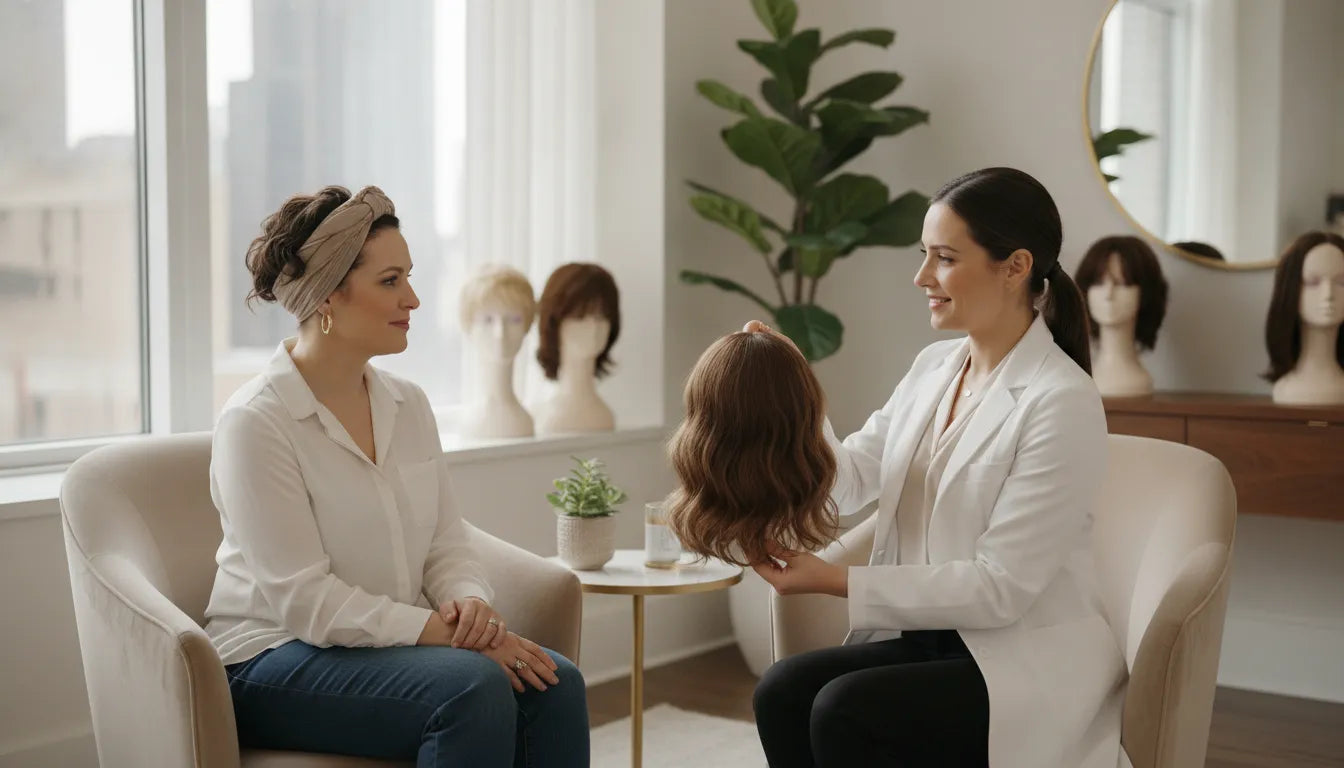
Choosing a cranial prosthesis is a deeply personal process, especially when you're managing medical hair loss. It’s about more than finding a beautiful auburn shade; it’s about finding a solution that feels secure, comfortable, and completely like you. This is why a professional consultation is the most important step you can take. Instead of guessing online or settling for a standard wig, sitting down with a specialist ensures your specific needs are met from day one, giving you confidence in your choice.
During a private consultation, a cranial prosthesis specialist will take the time to understand your unique situation. We’ll talk about your hair loss, gently assess your scalp to ensure the best and most comfortable fit, and take precise head measurements. This isn't a one-size-fits-all process. We discuss your lifestyle, your daily activities, and what you need from your hair prosthesis to feel confident and at ease. This personalized assessment is the foundation for creating a medical wig that looks and feels entirely natural.
A key part of the consultation is getting expert guidance on the materials and construction that will work best for you. We’ll walk you through options like lace front and monofilament tops, explaining how each feature contributes to a realistic hairline and scalp appearance. Most importantly, we prioritize scalp health and breathability, which is essential for anyone with a sensitive scalp from treatments like chemotherapy or conditions like alopecia. We also help you with the next steps, including how to get your cranial prosthesis covered by insurance. We can guide you on obtaining a prescription and provide the documentation your insurance provider requires, making the process much smoother.
Related Articles
- What Is a Cranial Prosthesis? A Complete Guide
- Medical Wig Cover: Your Step-by-Step Guide
- Cranial Prosthesis vs. Wig: What's the Difference?
- Your Guide to a Cranial Prosthesis Specialist Near Me
- Best Wigs for Alopecia: Guide, Insurance & Confidence
Frequently Asked Questions
What makes a cranial prosthesis different from a regular wig? A cranial prosthesis is a medical device specifically designed for individuals with hair loss due to conditions like alopecia or chemotherapy. Unlike a standard wig, its cap is constructed with soft, breathable materials to be gentle on a sensitive scalp. The fit is also more secure and customized for a bare head, providing comfort and confidence for all-day wear.
Will my health insurance help pay for my medical wig? It is very possible. Many insurance plans cover the cost of a "cranial prosthesis" when it is prescribed by a doctor for medical hair loss. The key is to use this specific medical term, not the word "wig," when communicating with your doctor and insurance provider. We can guide you through the process of getting a prescription and provide the necessary medical invoice for your claim.
I'm worried a cranial prosthesis will be hot or uncomfortable. Is this a valid concern? Your comfort is our top priority, and this is a very common question. Modern cranial prostheses are engineered to be lightweight and breathable. They are made with materials and cap designs, like monofilament tops, that allow for good airflow to your scalp. This helps prevent irritation and ensures you can wear your prosthesis comfortably all day, even with a sensitive scalp.
How can I be sure my auburn cranial prosthesis will look natural? A high-quality cranial prosthesis is designed to be undetectable. The use of 100% human hair ensures it moves and shines just like biological hair. Features like a lace front create a seamless hairline, while a monofilament top gives the appearance of hair growing directly from your scalp. A premium auburn color will also have multiple tones woven in, creating natural depth and dimension.
I'm new to this process. What is the first step to getting a cranial prosthesis? The best first step is to schedule a private consultation with a cranial prosthesis specialist. This is a supportive, one-on-one meeting where we can discuss your specific needs and lifestyle. We will take precise head measurements, explore different cap constructions and hair options, and help you find the perfect fit and shade in a comfortable, pressure-free environment.