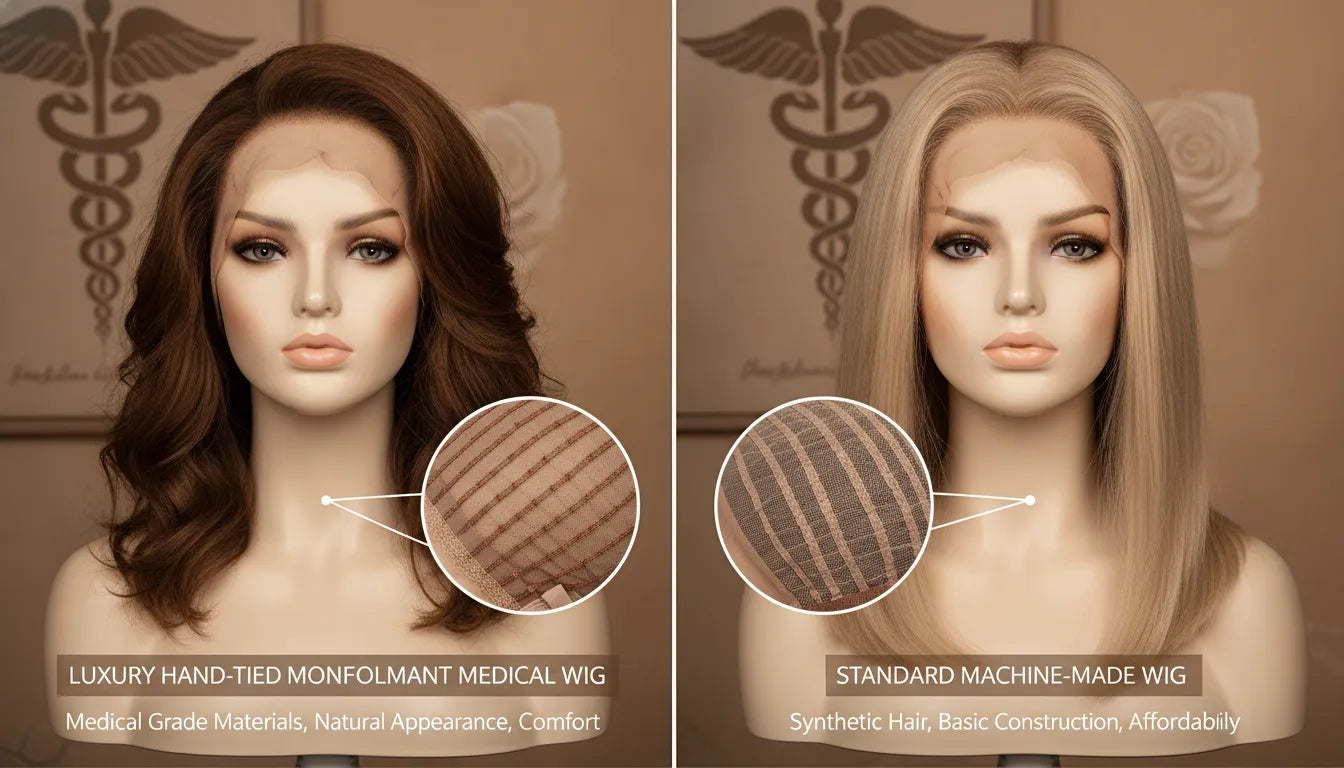
Luxury Medical Wigs vs Standard Wigs: What Actually Sets Them Apart
Ready to explore your insurance-covered options? Schedule a free insurance consultation with NYC Medical Wigs today to discover how much a luxury cranial prosthesis could cost through your health plan.
Cap Construction: Monofilament and Hand-Tied vs Machine-Made Caps
Luxury medical wigs use hand-tied monofilament caps designed for sensitive scalps, while standard wigs rely on machine-sewn rows that can irritate bare skin. Most insurance plans cover cranial prostheses as durable medical equipment but exclude fashion wigs entirely, creating a significant financial difference.
The foundation of any hair replacement system determines how it feels against your skin and how natural it appears. When evaluating luxury medical wigs vs standard wigs, the cap construction represents the most consequential engineering difference. A genuine cranial prosthesis incorporates medical-grade materials that prioritize airflow and pressure distribution, while fashion-grade pieces prioritize low manufacturing cost over wearer comfort.
How monofilament tops create a natural scalp appearance
A monofilament top represents the gold standard in cranial prosthesis construction. This design employs an ultra-fine transparent mesh that allows the wearer's natural skin tone to show through at the part line, creating the convincing illusion that hair is emerging directly from the scalp. The mesh construction also delivers superior breathability compared to the dense fabric liners found in budget caps. Research from Wig Medical confirms that this construction method is essential for achieving a natural-looking result, particularly because it enables multi-directional parting without exposing weft tracks or base material.
Standard wigs typically use a solid cloth top with hair fibers sewn into fixed rows. This method produces a flat, uniform appearance that lacks the dimensional variation of natural growth. In contrast, medical-grade monofilament tops remain soft against compromised skin, making them the preferred choice for patients undergoing chemotherapy or managing alopecia. For a deeper look at how medical codes support these devices, review our insurance coverage guide.
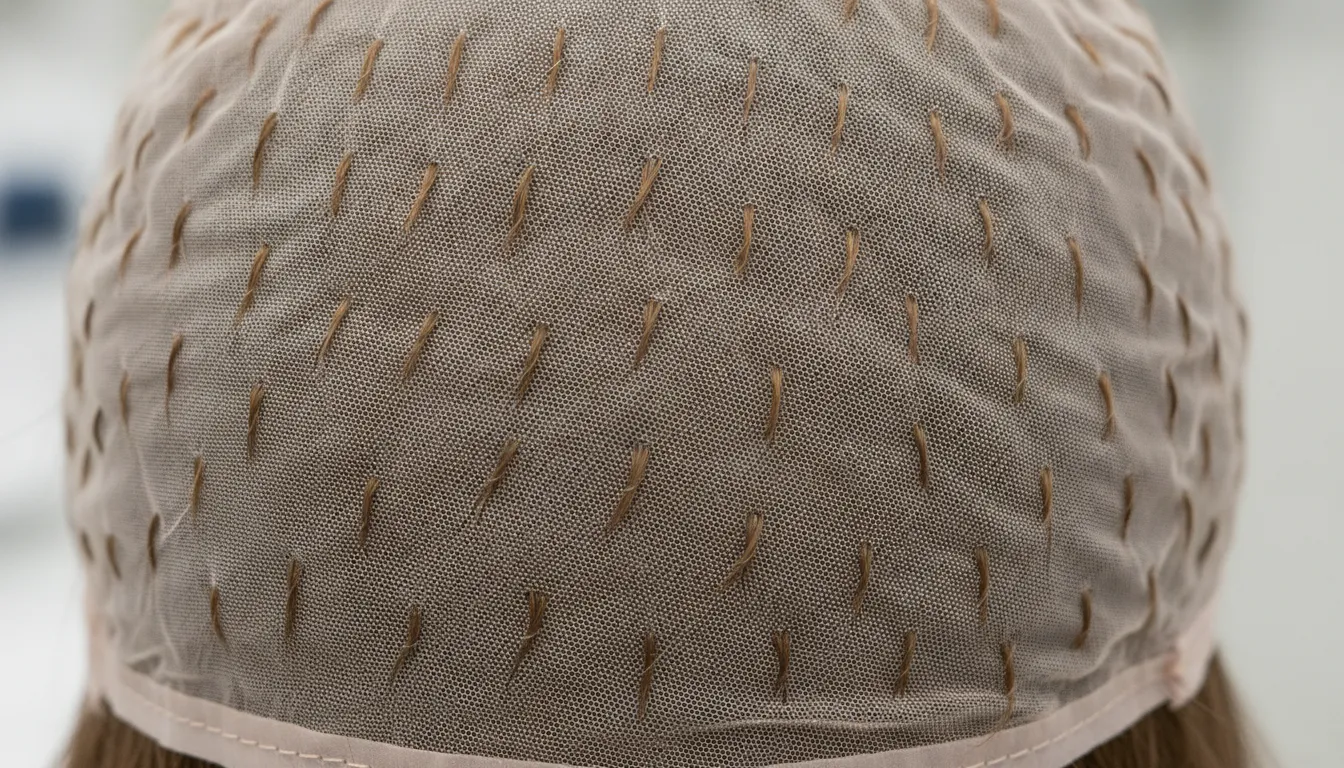
Hand-tied backs versus machine-sewn rows
The rear portion of a wig cap separates medical-grade craftsmanship from mass production. Budget wigs utilize machine-sewn wefts — strips of hair stitched horizontally onto fabric panels. While economical to produce, these rows add bulk and weight while restricting directional styling. Luxury medical wigs employ 100% hand-tied construction: each individual hair is knotted by hand into a breathable mesh base, allowing every strand to pivot independently for natural movement and unrestricted styling versatility.
Hand-tied caps are notably lighter and conform to the wearer's head shape without the rigid structure characteristic of machine-made alternatives. They eliminate the pressure points and abrasive seams that can trigger discomfort or irritation on a tender scalp. This patient-centered design philosophy is precisely why a cranial prosthesis is classified as a medical device. Browse our Tribeca Collection for examples of hand-tied craftsmanship.
Cap construction comparison
| Feature | Luxury Medical Wig | Standard Fashion Wig |
|---|---|---|
| Top Mesh | Ultra-fine transparent monofilament | Opaque cloth or stiff lace |
| Back Construction | 100% hand-tied | Machine-sewn weft rows |
| Skin Contact | Hypoallergenic, pressure-free | Can cause friction and itching |
| Hairline | Sheer lace front, undetectable edge | Thick, visible edge |
| Weight | Lightweight, breathable | Heavy, traps heat |
A well-executed hairline represents another hallmark of medical-grade caps. Premium cranial prostheses employ a delicate lace front that blends imperceptibly into the wearer's skin, enabling off-the-face styling without revealing the hairline. Standard wigs frequently feature a thickened edge that remains visible even with careful placement. For patients with scalp sensitivity, these construction details transform the daily wearing experience.
Hair Quality: European Remi Human Hair vs Synthetic Fibers
The most immediately apparent difference between luxury medical wigs vs standard wigs lies in the hair itself. Premium medical wigs from NYC Medical Wigs, including those in our Tribeca Collection, are crafted from 100% European Remi human hair. The defining characteristic of Remi hair is that the cuticle layer remains intact and the strands are aligned in the same direction, which prevents tangling, preserves luster, and extends the lifespan of the piece dramatically.
Why Remi hair justifies the investment
Remi hair is widely regarded as the highest grade of human hair available for cranial prostheses. Every cuticle runs in the same direction, eliminating the friction and matting that occur when cuticles oppose one another. This alignment ensures the hair moves and falls with the same fluid behavior as natural growth. The intact cuticle layer also preserves moisture and protects against environmental damage, contributing to the extended durability that medical wig wearers depend on for daily use.
Longevity and styling versatility
When comparing luxury medical wigs vs standard wigs, lifespan presents one of the most compelling value differentiators. A well-maintained human hair cranial prosthesis delivers twelve to eighteen months of wear, whereas synthetic alternatives typically degrade within four to six months. The superior tensile strength of Remi hair ensures the piece maintains its integrity through regular washing, styling, and daily handling.
Human hair also offers the practical advantage of thermal styling. Wearers can curl, flat-iron, or blow-dry a luxury medical wig just as they would their biological hair. Synthetic fibers lack this tolerance — heat exposure causes melting, frizzing, or permanent crimping. This styling flexibility allows patients to maintain their preferred appearance throughout treatment and recovery. The National Institutes of Health has documented that maintaining a positive self-image during medical treatment correlates with improved emotional well-being and treatment adherence.
Fit Customization: Custom-Fitted Cranial Prostheses vs One-Size-Fits-Most
Securing a medical wig is fundamentally different from selecting a wig off a retail shelf. At NYC Medical Wigs, we emphasize that fit is the single most consequential factor in cranial prosthesis satisfaction. A poorly fitted wig causes discomfort, slippage, and visible telltales that undermine the wearer's confidence. Custom-fitted luxury medical wigs are engineered to match the unique contours of each patient's head.
The multi-step fitting process
Professional cranial prosthesis fitting involves several precise stages. The process begins with a comprehensive scalp assessment to identify areas of sensitivity, bony prominences, or skin fragility — particularly important for patients with treatment-related hair loss. Precise measurements are then taken to establish the correct base dimensions, and the base can be modified to redistribute pressure away from sensitive spots that trigger headaches or discomfort.
Additional comfort enhancements include silicone gripper strips and soft velvet liners that maintain position without adhesive dependency. Standard wigs rely on elastic bands for retention, which can create tension headaches or lose elasticity over time. A custom cranial prosthesis uses a base that conforms intimately to the scalp, providing security through design rather than compression.
Why secure fit matters for medical patients
Patients who have lost all or most of their natural hair face a unique fitting challenge. Standard wigs are designed to sit over existing hair, using the bulk of natural growth to help with grip and volume. On a bare scalp, these same wigs shift, rub, and create pressure points. Medical-grade cranial prostheses are engineered specifically for this scenario, employing contoured bases that maintain position without adhesives, tapes, or harsh gripping mechanisms.
Medical wigs also accommodate the anatomical changes that can occur during treatment. Some patients experience scalp swelling or changes in head circumference during their medical journey. A custom-fitted prosthesis can be adjusted to keep pace with these changes, ensuring consistent comfort and security throughout the treatment cycle.
Comfort for fragile scalps
Standard wigs employ fabric liners that restrict airflow and trap heat against the scalp, creating a warm, moist environment conducive to irritation. Luxury medical wigs utilize lightweight, breathable textiles that promote air circulation and moisture evaporation. Patients can wear these pieces for extended periods — throughout a full workday or social engagement — without the discomfort that arises from trapped heat and friction.
The materials selected for medical-grade prostheses are also hypoallergenic, avoiding the chemical dyes, adhesives, and synthetic fibers that trigger contact dermatitis in sensitive individuals. When you choose a medical-grade cranial prosthesis, you are selecting a device designed for your body's specific needs rather than a one-size-fits-all commodity.
Medical-Grade Materials for Sensitive Scalps
Standard wigs are designed for occasional cosmetic use. A cranial prosthesis, by contrast, prioritizes therapeutic function and extended wear comfort. For patients experiencing hair loss secondary to medical treatment, the materials in direct contact with the scalp can significantly affect quality of life during an already challenging period.
Safe caps for compromised skin
Luxury medical wigs incorporate textiles that minimize friction and eliminate chemical irritation. This represents a critical distinction in the luxury medical wigs vs standard wigs discussion. A fashion wig may use coarse lace or chemically treated fabrics that provoke itching, redness, or allergic reactions. A medical wig employs soft, inert base materials that have been selected specifically for contact with treatment-compromised skin. These caps are lightweight and engineered for maximum airflow.
This is particularly vital for chemotherapy patients and those with alopecia, whose scalps are often thin, dry, and hypersensitive. Using a medical wig with appropriate materials prevents additional discomfort and allows the skin to rest and recover even while the prosthesis is worn.
Thermal and UV protection
Beyond hair replacement, a cranial prosthesis functions as a protective barrier. Many medical patients have reduced melanin and thinner skin following treatment, leaving the scalp vulnerable to UV damage and temperature extremes. Medical wigs provide built-in sun protection and thermal regulation, keeping the head cool in warm conditions and providing insulation in cooler environments.
This protective function is especially valuable for immunocompromised patients. The Mayo Clinic emphasizes that a wig should be comfortable to wear throughout the hair loss and regrowth cycle. Standard wigs lack the integrated sun protection and thermal management that medical-grade pieces deliver as standard features.
Why airflow and breathability matter
Conventional wigs trap heat close to the scalp, leading to perspiration buildup and skin breakdown over extended wear periods. Medical caps incorporate ventilated mesh panels that allow heat to escape and air to circulate, keeping the skin dry and healthy. For patients requiring daily prosthesis wear over months or years, this airflow capability is essential for long-term scalp health.
Premium cranial prostheses further enhance comfort through hand-tied knots that eliminate the rigid feel of machine construction. Each knot sits flush against the mesh rather than protruding into the scalp, preventing the pressure points that cause discomfort over time. When you invest in a medical-grade device, you receive a fit engineered to work with your body rather than against it.
Lace fronts without adhesive dependency
Many medical wigs feature lace front constructions that achieve a natural hairline without requiring glue or tape. This is especially important for patients with adhesive sensitivities or fragile skin that cannot tolerate chemical bonding agents. The soft mesh and silk components used in these prostheses feel like a second skin against the wearer's scalp, eliminating the pulling sensation that characterizes lower-quality alternatives.
This design philosophy allows patients to move through their day with confidence, knowing their prosthesis is secure without the discomfort of adhesive products. The difference between a medical-grade device and a standard wig is immediately apparent in both feel and appearance.
Insurance Coverage: The Financial Game-Changer
Acquiring a luxury medical wig represents a significant step in a patient's hair loss journey, and cost concerns are understandably top of mind. However, a cranial prosthesis is not a discretionary cosmetic purchase — it is a medically necessary device. This classification fundamentally changes the financial equation, as NYC Medical Wigs helps patients navigate insurance benefits that can dramatically reduce out-of-pocket expenses.
Understanding the coverage gap
Health insurance plans routinely exclude fashion wigs, classifying them as cosmetic accessories that the policyholder must fund entirely. When evaluating luxury medical wigs vs standard wigs from an insurance perspective, the distinction is unambiguous. A medical-grade cranial prosthesis prescribed for hair loss resulting from a qualifying medical condition is eligible for coverage under most major health plans.
Many patients discover that their plan covers 80 to 100 percent of the cost after deductible. Standard annual caps range from $350 to $500, though some plans extend significantly higher with appropriate medical documentation. A study published by the National Institutes of Health underscores the clinical necessity of cranial prostheses for patients experiencing medically induced hair loss.
Direct billing at NYC Medical Wigs
NYC Medical Wigs is among a select group of providers nationwide offering direct insurance billing for cranial prostheses. Most wig retailers require patients to pay the full retail price upfront and then submit a claim for reimbursement — a process that can take weeks or months. Our team handles the paperwork and communicates directly with your insurance carrier, eliminating the financial burden of fronting the full cost.
Our process follows a transparent three-step framework. First, we conduct a private consultation to understand your hair loss history and aesthetic goals. Next, we perform a benefit verification to determine your exact coverage levels and remaining deductible. Finally, we provide a clear cost estimate before any commitment is made. Begin this straightforward process on our insurance coverage page.
Standard billing codes and accepted plans
Insurance carriers use standardized medical codes to classify cranial prostheses. The most common code is HCPCS A9282, which covers a cranial prosthesis for a medical condition. For fully custom pieces requiring individual fabrication, the S8095 code is applied. Accurate coding is essential for claim approval and maximum benefit utilization.
NYC Medical Wigs works with a broad spectrum of major health plans, including:
- Medicare and Medicaid
- Blue Cross Blue Shield (BCBS)
- Aetna
- Cigna
- United Healthcare
Each plan maintains its own documentation and medical-necessity requirements. Our team understands these nuances and manages the submission process to ensure your claim is processed correctly the first time.
Is the Investment Worth It? Luxury Medical Wigs vs Standard Wigs by the Numbers
The upfront price of a luxury medical wig can give pause. But framing the decision as a medical device investment rather than a retail purchase clarifies the value proposition. A properly fitted cranial prosthesis delivers superior comfort, extended durability, and scalp health benefits that standard wigs cannot match. The total cost of ownership analysis shifts further when insurance coverage enters the equation.
Comparing total lifetime value
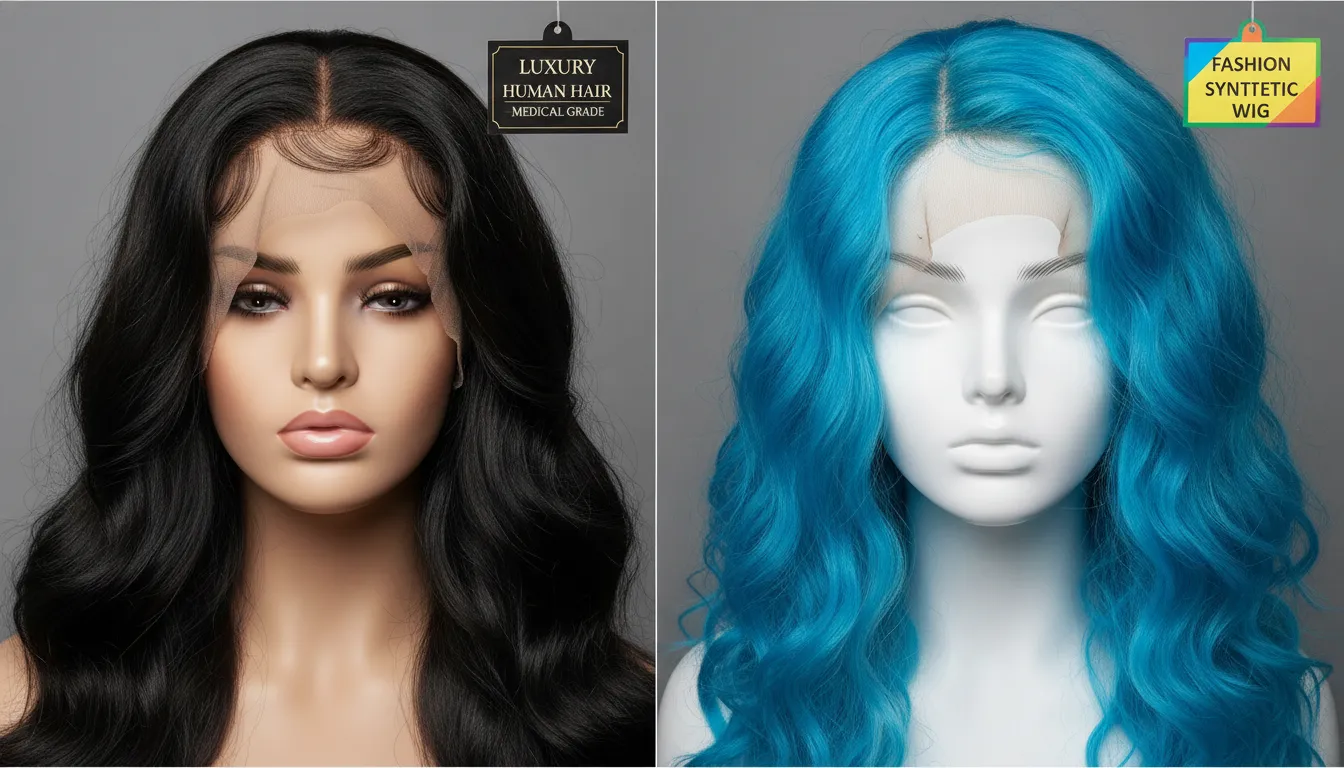
Standard fashion wigs range from $30 to $500. This low entry price conceals the reality that these products are not engineered for daily wear on sensitive scalps; their machine-sewn caps cause friction and their synthetic fibers degrade quickly. Luxury medical wigs at NYC Medical Wigs range from $375 to $4,846. The Hudson European Remi wig exemplifies the craftsmanship and materials that justify the investment. It includes a fine monofilament top and a fully hand-tied base.
| Factor | Standard Fashion Wig | Luxury Medical Wig |
|---|---|---|
| Price Range | $30 to $500 | $375 to $4,846 |
| Lifespan | 4 to 6 months | 12 to 18 months |
| Insurance Coverage | Not eligible | Typically 80% to 100% |
| Cap Material | Basic cloth or synthetic lace | Medical-grade ventilated mesh |
| Hair Type | Synthetic or low-grade human | European Remi human hair |
| Fit | One-size-fits-most | Custom-fitted to your head |
How insurance transforms the cost calculation
The single most important factor in the cost comparison of luxury medical wigs vs standard wigs is insurance eligibility. Standard wigs are ineligible for coverage, meaning every dollar comes from your pocket. A cranial prosthesis, recognized as a durable medical device, is covered by most major insurers. With BCBS, Aetna, Cigna, and others covering 80 to 100 percent of the cost, a $4,846 luxury wig may reduce to a manageable copay. FSA and HSA funds can also be applied toward any remaining balance.
Long-term savings analysis
A standard wig requires replacement every four to six months as the fibers mat and the cap loses shape. Maintaining a continuous fresh look requires three or more purchases per year, totaling $1,200 to $1,800 annually for mid-range options. A luxury medical wig, by contrast, serves reliably for twelve to eighteen months with proper care. After insurance reimbursement, the annual cost of a medical-grade prosthesis is frequently lower than the cumulative expense of replacing standard wigs. Choosing a device engineered for medical hair loss protects both your scalp health and your budget.
Ready to explore your options? Schedule a free insurance consultation with NYC Medical Wigs today to discover how much your health plan could cover toward a luxury cranial prosthesis.
Frequently Asked Questions
How long does a luxury human hair medical wig last?
A luxury medical wig constructed from European Remi human hair typically lasts between twelve and eighteen months with appropriate care, significantly outlasting synthetic alternatives that degrade within four to six months. According to Silk Opulence, medical-grade wigs are engineered for daily use and maintain their structural integrity better than fashion-oriented options. Using sulfate-free cleansing products and limiting heat exposure will extend the lifespan further.
Can I use my FSA or HSA to pay for a medical wig?
Yes, Flexible Spending Accounts and Health Savings Accounts can typically be used to purchase a cranial prosthesis. A medical wig is a qualified medical expense when prescribed for hair loss resulting from a diagnosed medical condition. FSA and HSA funds may be applied toward your copay, deductible, or any balance not covered by insurance. Check with your plan administrator to confirm whether a letter of medical necessity is required.
Does insurance cover the full cost of a cranial prosthesis?
Coverage varies by plan, but many policies cover between eighty and one hundred percent of the cost after deductible. While some plans cap coverage at a few hundred dollars, others extend full coverage with appropriate documentation from your physician. At NYC Medical Wigs, our direct billing service helps you avoid paying the full cost upfront while we negotiate with your insurance carrier on your behalf.
How do I start an insurance claim for a medical wig?
The process begins with scheduling a consultation at NYC Medical Wigs. During your visit, we document your medical history and assess your cranial prosthesis needs. We then contact your insurance provider to verify your specific benefits and obtain any necessary pre-authorization. Our team manages the entire claims process from documentation to follow-up, so you can focus on your health rather than paperwork.
What is the difference between a cranial prosthesis and a standard wig?
A cranial prosthesis is a medically classified device designed for patients experiencing hair loss from a qualifying medical condition. It features hand-tied construction, medical-grade materials for sensitive scalps, custom fitting, and eligibility for insurance reimbursement. A standard wig is a cosmetic accessory built for fashion purposes, typically using machine-made caps and synthetic fibers, and is not covered by health insurance.
Can I style a luxury medical wig with heat tools?
Yes. Because luxury medical wigs use 100% human hair, they can be styled with curling irons, flat irons, and blow dryers just like your natural hair. This flexibility allows you to change your look as desired, unlike synthetic wigs which are damaged by heat styling. For optimal longevity, use a heat protectant spray and avoid excessive temperatures above 350 degrees Fahrenheit.
Ready to take the next step?
Call NYC Medical Wigs at 201-892-6923 or schedule your free insurance consultation online to learn how we can help you access a luxury cranial prosthesis through your health plan.