Cranial Prosthesis Prescription: A Patient's Guide
Securing a medical wig should not add more stress to your health journey. A cranial prosthesis prescription is the formal medical order you need from your doctor to get insurance coverage for a medical-grade hair system. In this guide, we walk you through exactly how to talk to your doctor. What codes are required, and how NYC Medical Wigs supports you every step of the way.
Ready to get started? Call (212) 461-4118 to schedule a private consultation and learn how a cranial prosthesis prescription can help you access insurance coverage.
Many patients feel nervous or unsure about how to bring this topic up during a busy medical visit. Understanding this process is the first step toward getting the financial support you need. The path begins with a clear look at why this document is so important.
Why Does Insurance Require a Cranial Prosthesis Prescription?
A cranial prosthesis prescription is a formal medical order from a licensed healthcare provider that authorizes a medical-grade hair system. This document is a critical requirement when you seek reimbursement or direct coverage from your health insurance company. According to research shared by the Mayo Clinic, doctors write these orders to treat severe hair loss from chemotherapy, alopecia, or radiation. Most health insurance plans classify these specialized hair systems as durable medical equipment rather than standard cosmetic items. By securing this formal prescription, you can prove the medical necessity of your treatment and request coverage under your policy. This essential document must contain specific medical codes and terms to ensure your insurance provider can process your claim correctly.
When you experience hair loss from a medical condition like alopecia or chemotherapy, getting a medical wig is an important step. But to your health insurance company, a standard wig is viewed as a cosmetic item. To get coverage, you must prove that the hairpiece is a medical necessity rather than a fashion choice. This is where a cranial prosthesis prescription becomes a critical requirement for your insurance claim.
Classified as a Medical Device
Most health insurance plans do not pay for normal wigs. However, some insurance providers classify a cranial prosthesis as a medical device or durable medical equipment. This special category means the item is eligible for coverage under your medical plan. The cost of a high-quality human-hair prosthesis can be significant, so securing this medical status is vital for your finances. A formal prescription is the official proof that your doctor has ordered this device to treat your condition.
The Vital Terminology Trap
When filing an insurance claim, the words on your paperwork make a major difference. A prescription from your doctor must use specific medical terms rather than the word wig. These prescriptions often use medical terms like extra-cranial prosthesis, cranial hair prosthesis, or simply cranial prosthesis. If your doctor writes wig on the slip, your insurance provider will likely reject the claim. Using the correct medical name shows the insurer that the item serves a real medical purpose.
Coverage Varies by Health Plan
While a prescription is necessary, it does not guarantee that your insurer will pay. Health insurance coverage for these medical devices varies significantly by plan. You can read our cranial prosthesis prescription checklist to prepare your paperwork. Always call the member services number on the back of your insurance card to verify your benefits. They can confirm if your policy covers durable medical equipment or hair prostheses before you start your purchase.
Which Doctors Can Write a Cranial Prosthesis Prescription?
Any licensed physician who treats your hair loss condition can write a cranial prosthesis prescription. In most cases, the doctor managing your primary medical care is the best person to ask. These professionals can verify your diagnosis and explain why a medical-grade hair prosthesis is necessary for your health. Whether you see an oncologist, dermatologist, or primary care physician, the key is that the doctor can document the underlying medical condition causing your hair loss.
Getting a cranial prosthesis prescription insurance reimbursement starts with finding the right medical expert. Any licensed physician who treats your hair loss condition can write this document. In most cases, the doctor managing your primary medical care is the best person to ask. These professionals can verify your diagnosis and explain why a medical-grade hair prosthesis is necessary for your health.
Oncologists and Cancer Care Teams
If you face hair loss from cancer treatments like chemotherapy or radiation, your oncologist is the primary doctor to write your prescription. You should talk with your oncology care team early in your treatment planning to know if hair loss is expected, as outlined by the Mayo Clinic. Your cancer specialist will write the prescription using exact medical terms like cranial hair prosthesis or extra-cranial prosthesis to support your eventual insurance claim.
Dermatologists for Skin and Hair Conditions
Dermatologists are specialists who focus on hair, skin, and nail health. If your hair loss is caused by alopecia areata, alopecia totalis, or scarring alopecia, a dermatologist is the ideal provider to write your prescription. These doctors can perform scalp tests, track your hair loss progress, and document the medical necessity of a cranial prosthesis. They can also provide the correct medical codes your insurance company needs to review your coverage options.
Primary Care Physicians and Other Specialists
Your primary care doctor or family physician can also write a prescription for a medical wig. If you have been diagnosed with an autoimmune disease, thyroid disorder, or hormonal imbalance that causes hair loss, your general doctor or endocrinologist can help. As long as the doctor is licensed and can document the underlying medical condition causing your hair loss, insurance providers will accept their written prescription. You can also explore options like medicaid coverage for cranial prosthesis if your primary doctor participates in state programs.
When Should You Talk to Your Doctor About a Cranial Prosthesis?
The best time to discuss a cranial prosthesis prescription is as soon as you know you will experience medical hair loss. For cancer patients, this means right after diagnosis before chemotherapy or radiation begins. For alopecia patients, the ideal time is immediately after receiving your diagnosis. Starting this conversation early gives you time to get the correct paperwork, verify your insurance benefits, and plan for fitting before hair loss begins.
Timing plays a critical role when you seek a cranial prosthesis prescription. Discussing hair loss with your medical team early helps you prepare for the physical and emotional changes ahead. NYC Medical Wigs recommends starting this process as soon as you expect hair loss, rather than waiting for it to begin. Planning ahead gives you more control and helps ensure a smoother transition.
Talk to Your Oncology Team Before Treatment
For cancer patients, the best time to start the conversation is right after your diagnosis. You should ask your oncology care team if hair loss is expected with your specific treatment plan (Mayo Clinic). If you undergo radiation therapy, ask your team if hair loss will occur in the treated area (Mayo Clinic). Knowing what to expect allows you to take action before therapy begins.
Consult Your Dermatologist at Diagnosis
If you experience hair loss due to alopecia, you should speak with your dermatologist as soon as you receive your diagnosis. A specialist can assess your condition and discuss a medical wig as part of your overall care. Starting this dialogue early helps you explore therapeutic options and gather the necessary medical documentation. You can use our cranial prosthesis prescription checklist to prepare for this medical visit.
Allow Time for Insurance Verification
Getting a medical wig covered by insurance requires careful planning. Many health plans have strict rules and may take 30 days or more to process prior authorization requests. Early research into your policy guidelines protects you from unexpected out-of-pocket costs (NYC Medical Wigs). Understanding your benefits before you make a purchase ensures you follow the proper steps for an insurance coverage for a medical wig claim.
Ensure Peace of Mind and a Precise Fit
Designing a custom cranial prosthesis takes time. Planning early allows you to explore different base designs and cap styles while you still have your natural hair (NYC Medical Wigs). This timeline gives the design team a clear reference for your hair color, texture, and growth pattern. Most importantly, securing your medical device early gives you peace of mind, allowing you to focus fully on your health and recovery (NYC Medical Wigs).
Ready to take the next step? Call (212) 461-4118 to schedule your private consultation and start your cranial prosthesis prescription process today.
How to Ask Your Doctor for a Cranial Prosthesis Prescription
Asking your doctor for a cranial prosthesis prescription is straightforward when you know what to say. Use direct medical terminology, request a statement of medical necessity, and ask your doctor to include the correct ICD-10 diagnostic codes. Most physicians are familiar with writing these orders, but you need to ask for the specific terms and codes that insurance companies require to approve your claim.
You can get insurance help for your medical hair loss. To start, you will need a medical script. Asking your doctor for a cranial prosthesis prescription might feel hard. But your care team is ready to help you. Many patients feel empowered when they take this step to manage their care.
Be Direct About Your Needs
You should speak plainly with your doctor about your hair loss. Tell your provider that you want to buy a medical wig. Explain that you need a script to get insurance help. Doctors are used to these requests, but you must ask for it yourself. According to research from the Mayo Clinic, a clear prescription is a key rule to get insurance payment. Tell them you want a script for a cranial hair prosthesis.
Follow These Steps to Ask for Your Script
Use these simple steps when you meet with your oncology team or physician:
- Use the right medical terms. Ask your doctor to write the script for a cranial prosthesis or a hair prosthesis. Do not let them write the word wig. Whitelisted insurance terms are key to get your claim approved.
- Ask for a medical necessity statement. Tell your provider that the document must state that the device is a medical necessity. Ask them to write this clear fact on your script. It must connect the device to your diagnosis, such as alopecia or chemotherapy.
- Get the diagnosis codes. Ask your oncologist to put the correct ICD-10 diagnostic codes on the form. These codes match your specific condition. This helps your insurance team review the claim without delays.
- Check if you need prior approval. Ask your care team if your health plan needs a prior authorization form first. Some health plans require your doctor to send supporting clinical notes before you buy.
- Request a supporting letter. Ask your doctor to write a short letter. This should explain why the device is needed for your care. You can use an online guide to get a letter of medical necessity that has the correct details.
Sample Phrases to Use
You can start the conversation with these simple phrases. Say, I expect hair loss from my treatment, and I want to prepare. Can you write a prescription for a cranial prosthesis? You can also say, My insurance plan may cover a hair prosthesis if I have a script. Could you write one with the ICD-10 codes for my diagnosis?
What Your Cranial Prosthesis Prescription Must Include
A valid cranial prosthesis prescription must include the HCPCS code A9282 for the device itself. The correct ICD-10 diagnostic code that matches your condition (such as L63.9 for alopecia or L65.1 for chemotherapy-related hair loss). An explicit statement of medical necessity, and the physician's signature on official clinic letterhead with their NPI number. Missing any of these elements can result in your insurance claim being denied.
To secure coverage from your health insurance provider, you will need a precise cranial prosthesis prescription. Insurance companies have strict rules for medical claims. If your paperwork lacks the right details, the insurer may deny your claim. Working with your doctor to write the order correctly will help you avoid delays and extra out-of-pocket costs.
Required Medical Codes
Every clinical order must list the correct industry codes. For the medical device itself, your doctor must write the Healthcare Common Procedure Coding System code A9282, which stands for a synthetic or human-hair cranial hair prosthesis. The prescription must also list a valid International Classification of Diseases diagnostic code. This code links your hair loss directly to a specific medical condition, which establishes the medical necessity of the device. You can learn more about these requirements by reading our letter of medical necessity guide.
| Code Type | Specific Code | What It Means | When It Applies |
|---|---|---|---|
| HCPCS Code | A9282 | Cranial hair prosthesis | Required for all medical wig claims |
| ICD-10 Code | L63.9 | Alopecia areata, unspecified | For autoimmune hair loss conditions |
| ICD-10 Code | L65.1 | Anagen effluvium | For active hair loss caused by chemotherapy |
| ICD-10 Code | T45.1X5A | Adverse effect of antineoplastic drugs | Required when cancer drugs cause the hair loss |
| ICD-10 Code | Z51.11 | Encounter for antineoplastic chemotherapy | For encounters involving active cancer treatments |
Essential Doctor and Clinic Information
The layout and official details of the document are just as important as the clinical codes. The prescription must be written on official clinic letterhead that shows the clinic address and phone number. Your doctor must sign and date the document. To file your claim successfully with a group like Mayo Clinic, the paper must also show the physician's National Provider Identifier number. This unique number proves to the insurer that the provider is licensed and registered to practice medicine.
Explicit Statement of Medical Necessity
The insurer needs to see a clear explanation of why you need this medical device. Your doctor must write a short statement of medical necessity. This note must state that your hair loss is caused by a medical condition or treatment, rather than a cosmetic preference. The statement should use formal medical terms. It should ask for a "cranial prosthesis" or a "hair prosthesis" instead of using the word "wig" to prevent the claim from being rejected as a beauty purchase.
What to Do If Your Doctor Is Unfamiliar with Cranial Prosthesis Prescriptions
If your doctor is unfamiliar with writing a cranial prosthesis prescription, bring a cheat sheet with the required terms. Tell them to use "cranial prosthesis" or "hair prosthesis" instead of "wig," include code HCPCS A9282, and list the ICD-10 code that matches your diagnosis. Most physicians simply need the correct billing language to write the prescription properly, and providing this information up front saves time.
Your doctor's main focus is your medical care, not billing codes. Because of this, some providers may not know how to write a cranial prosthesis prescription insurance reimbursement request. If your physician is unsure how to proceed, you can help by giving them the exact medical terms and billing codes they need to complete the form.
Give Your Doctor a Clear Code Cheat Sheet
You can make the process easy for your doctor by bringing a simple cheat sheet to your next visit. Tell your provider that insurance plans require specific medical terminology. The prescription must use the term cranial prosthesis or hair prosthesis instead of the word wig. Your provider must also include the standard billing code HCPCS A9282 on the form. This code is the official medical classification for a cranial hair prosthesis.
Include the Right Diagnosis Codes
To establish medical necessity, your doctor must list the correct ICD-10 diagnosis code that matches your condition. For patients with alopecia, the doctor should use a code between L63.0 and L63.9. If you are experiencing hair loss due to chemotherapy, the doctor should use code L65.1 or T45.1X5A. For general chemotherapy sessions, code Z51.11 is also helpful. Some insurance plans require prior authorization, so getting these exact codes from your doctor early is vital for your Mayo Clinic cancer care plan.
Ask for a Referral or Find Local Support
If your primary doctor still feels unsure about writing the prescription, ask for a referral to a specialist. A dermatologist or oncologist writes these orders often and will be familiar with the process. You can also contact local cancer support groups or patient navigators, as they often help patients manage the insurance process for medical devices. If your plan requires more proof, you can ask your specialist to help you get a letter of medical necessity to submit alongside your prescription.
After the Prescription: Next Steps with NYC Medical Wigs
Once you have your cranial prosthesis prescription, the next steps are scheduling a private consultation at NYC Medical Wigs. Verifying your insurance coverage, and selecting your custom human-hair prosthesis. Our team helps you review your prescription codes, check your benefits, and get a precise fit so you can move forward with confidence.
Getting your cranial prosthesis prescription insurance reimbursement process started begins right after your doctor hands you the paperwork. This document is not just a medical order. It is your key to getting a specialized, comfortable hair prosthesis that fits your needs. Our team at NYC Medical Wigs helps you use this document to secure a custom fit and navigate your insurance options.
Your Private Studio Consultation
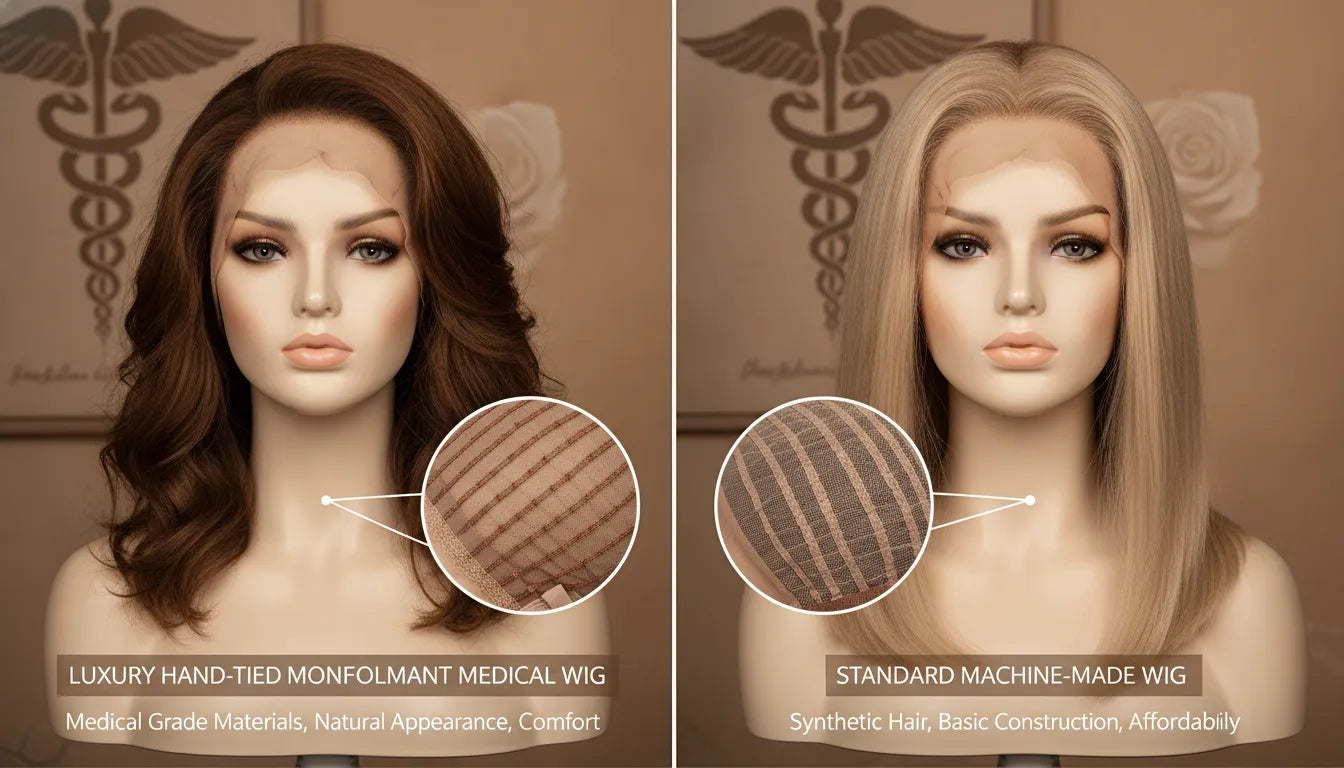
Once you have your prescription, you should schedule a private consultation. We host these sessions at our studio in New York City. During this visit, we guide you through the process of choosing a custom medical hair piece. We look at different base types, such as lace-front and monofilament-top styles. These styles provide a natural look and keep your sensitive scalp comfortable. Meeting in person lets us take precise head measurements so your piece fits securely.
Verifying Your Insurance Coverage
We work with you to understand your plan details. Health policies do not guarantee coverage, so we help you verify your benefits. We assist you by reviewing your prescription, diagnostic codes, and any required paperwork. We also check if your insurer requires a letter of medical necessity before you make a purchase. If your health plan does not cover the full cost. You can often use your Flexible Spending Account (FSA) or Health Savings Account (HSA) funds to pay for these qualified medical expenses.
Selecting and Fitting Your Medical Wig
The final step is selecting and fitting your human-hair medical wig. Human-hair prostheses offer the highest level of comfort, movement, and styling options. Our team fits the piece to your scalp and makes any needed adjustments. Our goal is to help you feel like yourself again by giving you a beautiful, secure medical wig. We also give you an itemized receipt with the correct medical billing codes to make submitting your claim as simple as possible.
Frequently Asked Questions
What is a cranial prosthesis prescription?
A cranial prosthesis prescription is a written order from a medical doctor for a medical-grade hair system. Unlike a standard fashion wig, health plans view this as a medical device to treat hair loss from conditions like alopecia or chemotherapy. According to the Mayo Clinic, you must have this prescription to file an insurance claim for reimbursement.
Which doctors can write a prescription for a cranial prosthesis?
Your treating physician must write the prescription for your medical hair system. If you are going through cancer treatments, your oncologist is the best doctor to ask. If you have hair loss from autoimmune conditions, your dermatologist can write it. Any licensed doctor who treats your hair loss condition can write this order to show your medical necessity.
Why does my prescription need to say cranial prosthesis instead of wig?
Insurance companies usually view the word wig as a cosmetic purchase and will deny the claim. To get coverage, your doctor must use medical terminology. The prescription must state cranial prosthesis or hair prosthesis. It must also list the correct medical billing codes to prove the device is a medical necessity rather than a fashion item.
Will health insurance cover a cranial prosthesis prescription?
Many health plans cover medical wigs, but coverage is never guaranteed. According to policy guidelines on NYC Medical Wigs, coverage depends entirely on your specific insurance benefits. Some plans cover the cost under durable medical equipment. You should call the member services number on the back of your card to verify your benefits before buying.
Schedule a private consultation for your cranial prosthesis
Delaying this step can make navigating your insurance coverage and finding the right hair solution much harder than it needs to be. Setting up a professional fitting early in your hair loss timeline ensures you receive personalized care before treatment or shedding begins. Our compassionate team at NYC Medical Wigs is ready to help you feel confident and comfortable throughout this journey.
Ready to get started? Call (212) 461-4118 to schedule a private consultation for your cranial prosthesis prescription and find the medical wig that is right for you.