Lace Front Cranial Prosthesis vs. Monofilament Caps
Choosing a cranial prosthesis during cancer treatment or alopecia can feel deeply personal, especially when comfort and realism matter equally. The cap construction affects how the hairline looks, how the prosthesis feels against sensitive skin, and how freely you can style it.
A lace front cranial prosthesis uses a sheer front edge to create a natural-looking hairline, while a monofilament top focuses on scalp realism, breathability, and flexible parting. The right choice depends on your scalp sensitivity, preferred styling, hair-loss pattern, and daily comfort needs.
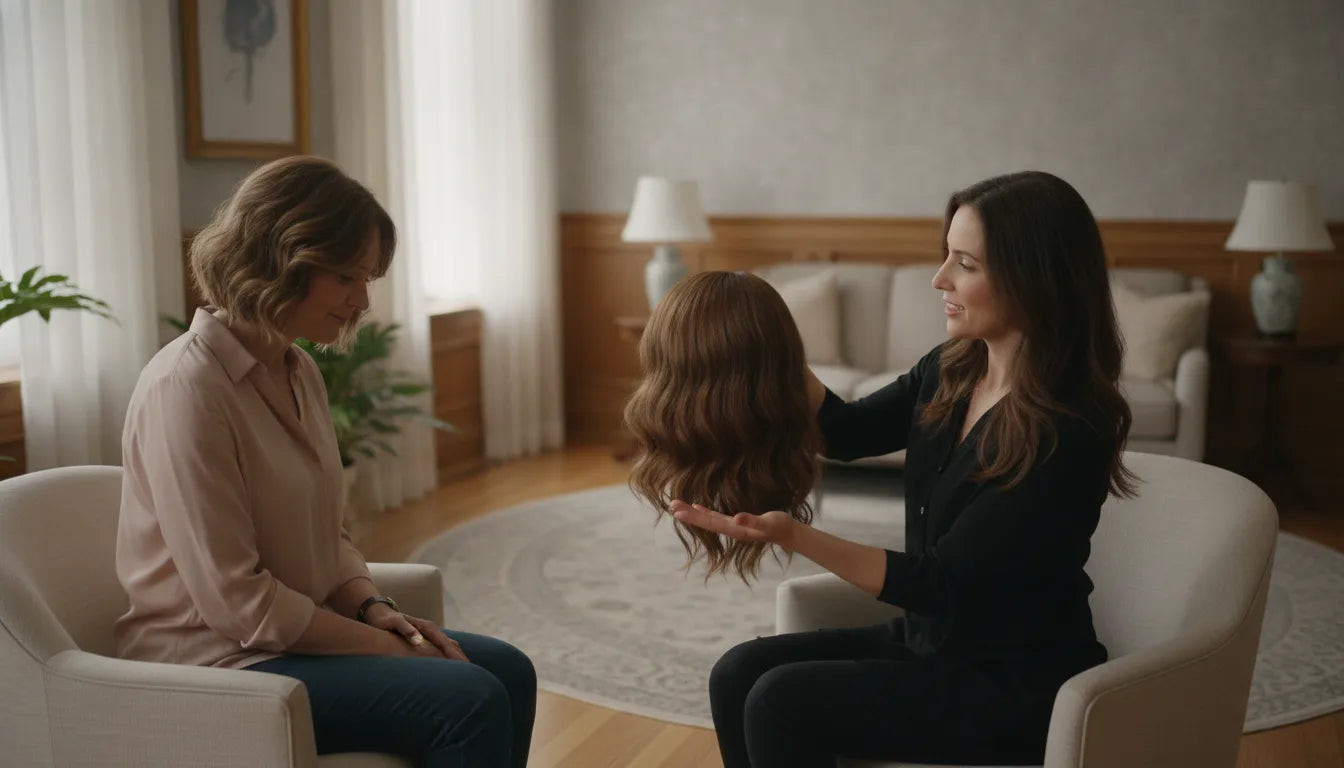
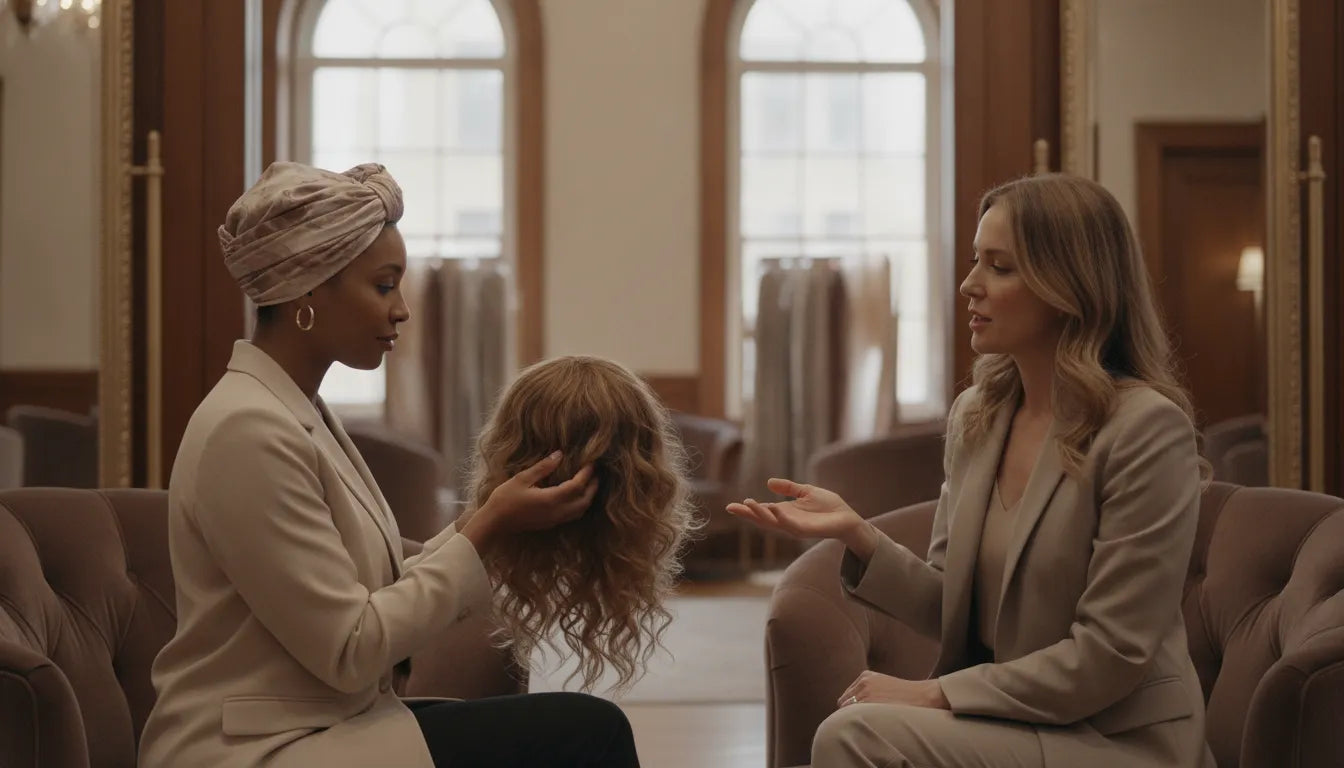
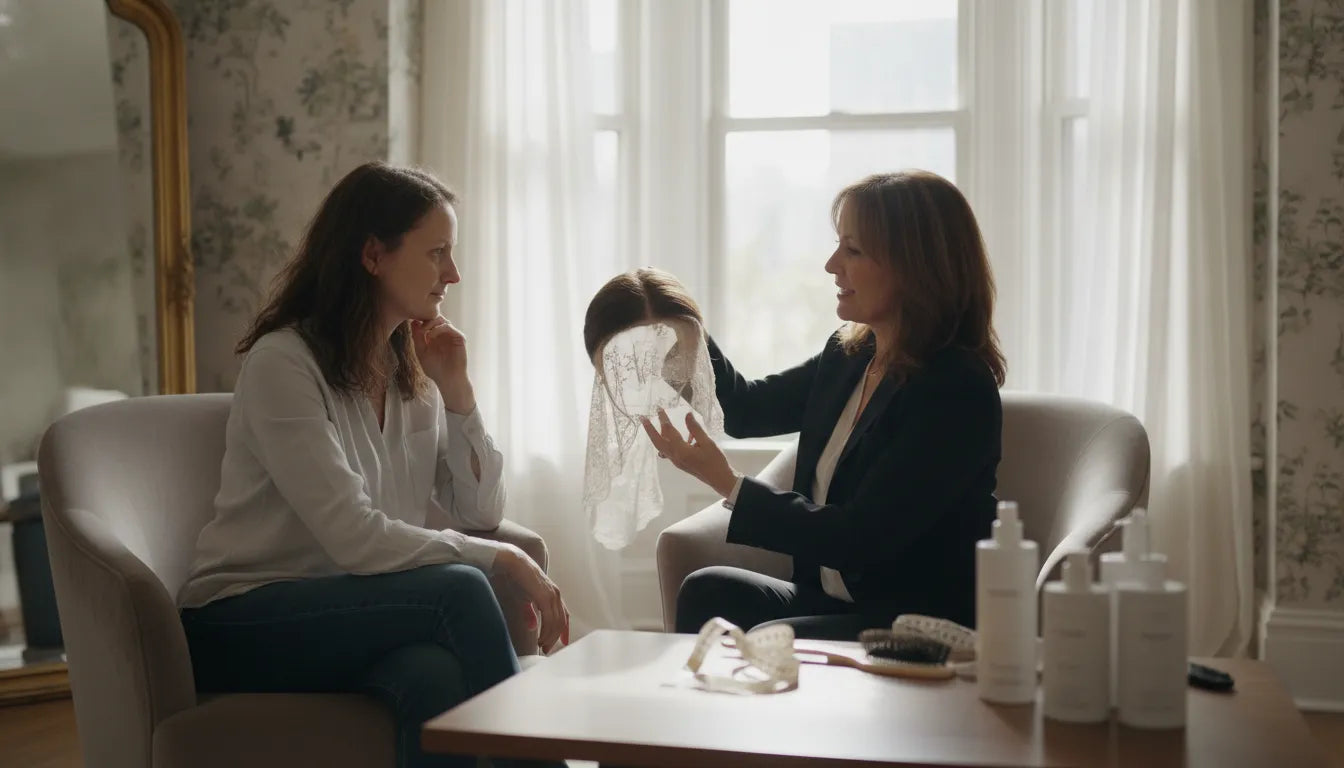
Schedule a private consultation to compare lace front and monofilament cranial prostheses in person.
Understanding the materials and hand-tied details behind each construction makes an in-person consultation more productive. It also gives you a clearer way to describe what feels supportive as you compare medical hair options.
What Is a Lace Front Cranial Prosthesis?
A lace front cranial prosthesis is a medical hair solution designed to create a natural-looking front hairline during medically related hair loss. Its construction combines a sheer lace band with carefully hand-tied human hair. The lace rests along the front edge, where it blends visually with the skin.
Unlike a standard cap construction, the lace helps soften the transition between the forehead and the hairline. This design can be especially meaningful when hair loss has changed how your face feels and looks. The goal is not simply coverage, but a secure, comfortable appearance that supports confidence.
How the lace front creates a natural hairline
The sheer lace band is what makes a lace front hairline look natural. The lace is thin and sheer, allowing the front edge to appear less defined against the skin. Hand-tied human hair can then emerge from that area with a softer, more individualized appearance. According to Breastcancer.org, lace-front construction allows hair to move naturally at the hairline and creates a more natural transition from the forehead.
This subtle movement can make the hairline look more realistic when the hair is gently brushed away from the face. Lace front construction is therefore well suited to patients who prefer styles that keep some or all hair off the forehead. The exact effect depends on the cap fit, hair density, and customization.
Why adhesive-free wear may matter during treatment
Many patients experiencing chemotherapy-related hair loss or alopecia also manage scalp sensitivity. A well-fitted lace front cranial prosthesis may not require adhesive to create a natural-looking hairline. Avoiding adhesive can be helpful for sensitive scalps that may react to additional products.
- Sheer lace helps the front edge blend with the skin.
- Hand-tied human hair supports a soft, natural movement.
- The construction can accommodate off-the-face styling.
- A proper fit may allow comfortable wear without adhesive.
During an in-person consultation, a cranial prosthesis specialist can assess your scalp, discuss attachment preferences, and adjust the fit for comfort. You deserve a medical wig solution that respects both your physical sensitivity and your sense of self.

Book an in-person fitting to see how the lace front hairline feels against your scalp.
What Is a Monofilament Top Cranial Prosthesis?
A monofilament top is a cap construction designed to create a natural-looking scalp while supporting comfort during medical hair loss. Each individual hair strand is hand-knotted into a soft, breathable mesh or fabric base. Because the strands are secured separately, they can appear to emerge directly from the scalp rather than sitting on a visible base.
This construction can be especially reassuring when your scalp feels sensitive during chemotherapy, alopecia, or another medical condition. The breathable material allows airflow across the top of the head. A well-fitted medical wig should feel secure without creating unnecessary pressure or irritation.
How the scalp illusion works
The fine mesh under each strand creates the scalp illusion that makes a monofilament top look natural. The mesh separates each hair visually from the cap, so the top appears more like natural hair growth, even when someone views it from above. Breastcancer.org explains that a monofilament crown, part, or top mimics hair growth from the scalp and supports a natural appearance.
At NYC Medical Wigs, this scalp illusion is considered alongside your hair loss pattern, skin sensitivity, and preferred coverage. The goal is not simply to make the prosthesis look realistic. It is to help you feel comfortable and recognized in your own reflection.
Why multi-directional parting matters
Many monofilament top constructions allow multi-directional parting. You may be able to move the part toward the center, side, or another position that feels familiar. This flexibility can help the prosthesis work with your face shape, natural styling habits, or changing preferences.
- Part the hair where it feels most natural for your everyday appearance.
- Create the visual effect of hair growing from different directions.
- Adjust the styling as your comfort, confidence, or treatment experience changes.
Multi-directional parting does not mean every prosthesis offers unlimited styling options. The available movement depends on the cap design, hair density, and individual fit. During a private consultation, a cranial prosthesis specialist can show you how the top responds before you choose.
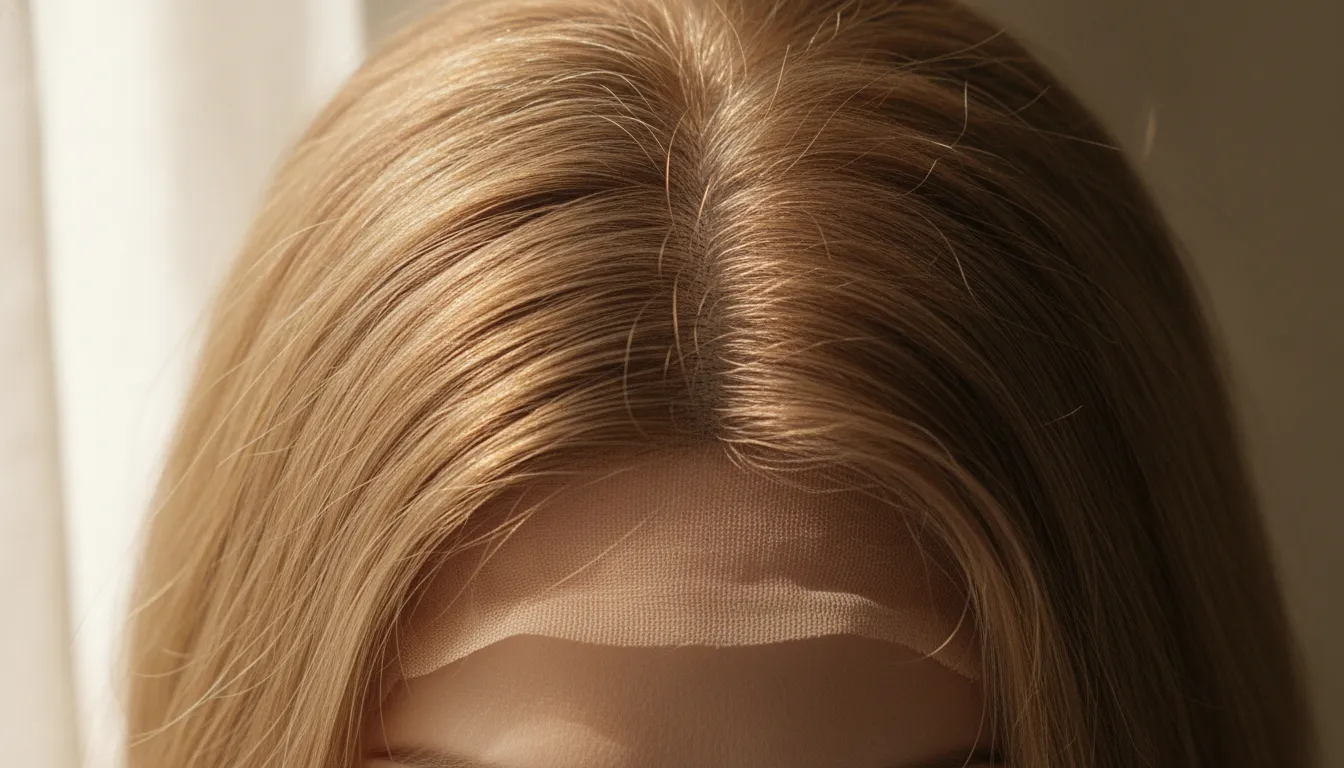
A monofilament top may be a thoughtful option when scalp comfort, airflow, and a natural-looking part are priorities. You deserve patient, unhurried guidance while finding the construction that supports you through this transition.
Comfort, Breathability, and Sensitive Scalps: How Lace Front and Monofilament Caps Compare
Cap construction can affect comfort, airflow, and how naturally a cranial prosthesis moves during daily wear. A cranial prosthesis is a medical-grade wig tailored for people experiencing hair loss from chemotherapy or alopecia. The right choice depends on your scalp sensitivity, styling preferences, and how long you expect to wear it each day.
| Feature | Lace front | Monofilament cap |
|---|---|---|
| Hairline realism | Sheer lace blends near the forehead, creating a natural-looking transition. | The cap creates a realistic scalp appearance where the hair is parted. |
| Parting options | Parting may follow the design and placement of the lace-front construction. | Individual strands support multi-directional parting and flexible placement. |
| Breathability | Lightweight lace can allow airflow around the front edge. | Soft, breathable mesh provides airflow across the top of the scalp. |
| Scalp comfort | Can provide a comfortable hairline without adhesives that may irritate sensitive skin. | Soft mesh can feel gentle against a sensitive scalp during extended wear. |
| Styling versatility | Well suited to off-the-face styling because the hairline appears less visible. | Supports varied parting and natural-looking volume across the top. |
| Best for | Patients prioritizing hairline realism and off-the-face styling. | Patients prioritizing airflow, flexible parting, and scalp comfort. |
These distinctions reflect the construction details described in the medical cap construction guide. Individual strands in a monofilament cap are tied to soft mesh, while lace fronts create a gradual hairline transition.
When Your Scalp Is Sensitive During Treatment
Chemotherapy and other treatments can leave the scalp more tender, dry, or reactive than usual. A lace front may be helpful when you want a natural hairline without relying on adhesive near the forehead. A monofilament cap may feel preferable when soft mesh and reduced pressure across the scalp are your priorities.
Comfort is personal, especially when your scalp is changing. A medical consultation can help you assess cap edges, lining, fit, and any areas that feel warm or restrictive.
Breathability for All-Day Wear
Airflow matters when you wear a cranial prosthesis through work, appointments, travel, or family activities. Monofilament designs are known for superior airflow through breathable mesh, which can support comfort during longer wear. Lace front designs can remain lightweight, while their main advantage is often the natural-looking front edge.
Try both constructions in person before you decide. Your specialist can adjust the fit and help you choose the balance of breathability, scalp comfort, and confidence that suits your treatment journey.
Styling Versatility and Hairline Realism: Lace Front vs. Monofilament Construction
Styling versatility for daily life
- A lace front supports styles that move hair away from the face. Its sheer lace band blends near the forehead, helping create an unobtrusive hairline.
- This construction can support gentle ponytails, swept-back styles, and other off-the-face looks when the fit and density are appropriate. A hand-tied human-hair cranial prosthesis also allows controlled styling with professional guidance.
- Human hair can be shaped for a patient's preferred texture and routine. Heat, tension, and frequent manipulation should remain limited, especially when the scalp feels tender during treatment.
Creating a natural hairline illusion
- The lace front creates a gradual transition from forehead to hairline. Breastcancer.org notes that this construction allows hair to move naturally at the hairline and look more realistic.
- That subtle movement matters when a patient sits close to others, changes position, or chooses a style with the front hair exposed. The goal is not dramatic styling. It is confidence in an appearance that feels like her own.
- For sensitive scalps, NYC Medical Wigs may recommend a medical-grade fit that does not depend on adhesives. Individual needs should guide the cap choice and styling approach.
Part placement and scalp realism
- A monofilament top offers a different kind of flexibility. Individual strands are tied to a soft, breathable mesh, creating the appearance of hair emerging from the scalp.
- Monofilament construction can allow part placement in multiple directions. Breastcancer.org explains that a monofilament crown, part, or top mimics natural hair growth and improves realism.
- This option may suit patients who change their part, prefer visible scalp detail, or want styling freedom without emphasizing the front edge. A hand-tied human-hair design can further support a personalized daily routine.
Neither construction is universally better. A private fitting can help you compare hairline visibility, part placement, comfort, and styling needs with compassion.
Explore insurance coverage guidance for cranial prostheses while you consider which cap construction fits your needs.
Which Cranial Prosthesis Cap Construction Fits Your Hair Loss Journey?
- Cap construction should reflect your scalp comfort, hair-loss pattern, styling preferences, and treatment timeline.
- A cranial prosthesis is a medical-grade wig tailored for patients experiencing hair loss from chemotherapy or alopecia. Learn how cranial prosthesis construction differs from standard wig construction before comparing individual features.
For chemotherapy-related hair loss
- Scalp sensitivity may become a central concern during treatment. A medical-grade cranial prosthesis can be tailored to chemotherapy-related hair loss, while a comfortable fit helps reduce unnecessary pressure and friction.
- A lace front may suit patients who want the option to style hair away from the face. Its sheer front edge blends with the skin, and the hair can move naturally along the hairline. NYC Medical Wigs also offers lace-front medical wigs designed without adhesives that may irritate sensitive scalps.
- A monofilament top may be preferable when breathability and a natural scalp appearance matter most. Individual strands are tied to soft, breathable mesh, creating the impression that hair grows from the scalp.
- If treatment has not started, consider a consultation early. Color and texture matching can make the transition feel more familiar, especially when hair loss may progress quickly.
For alopecia areata or alopecia totalis
- Alopecia patterns can change, so a secure, adjustable fit and flexible cap design deserve careful attention. A monofilament top allows multidirectional parting, which can provide more freedom when your natural part is no longer predictable.
- A lace front can provide a soft, natural-looking transition at the forehead. It may be especially useful if you prefer hair positioned away from your face or want a realistic hairline during movement.
- Patients with extensive or complete hair loss may benefit from evaluating both constructions in person. The best choice depends on scalp comfort, coverage needs, desired parting, and how the prosthesis feels during daily wear.
- Progressive thinning may call for a different balance. Some patients prioritize a natural-looking hairline, while others need scalp coverage and flexible styling as density changes.
- Insurance requirements vary by plan and individual policy. An oncologist's prescription using terms such as "cranial prosthesis" may support an insurance claim, but it does not guarantee reimbursement.
- Medicare, Medicaid, BCBS, Aetna, Cigna, and United Healthcare are plans patients may explore. Review insurance coverage guidance for cranial prostheses and confirm requirements directly with your plan.
Why In-Person Fitting Matters for Lace Front and Monofilament Prostheses
- An in-person fitting turns a difficult decision into a guided medical-wig experience. You can compare lace front and monofilament constructions before choosing the cap that feels most supportive.
- Trying both designs matters because comfort is personal. A lace front can create a natural-looking forehead transition, while a monofilament top can provide a scalp-like appearance and breathable feel. Your specialist can help you notice how each construction responds to your scalp sensitivity, daily routine, and preferred styling.
- Color and texture matching also require more than viewing an online photograph. During a fitting, NYC Medical Wigs can assess your complexion, former hair color, texture, and density goals. Preparing before hair loss begins may make this process easier, especially when matching your familiar appearance feels emotionally important.
- Fit affects comfort from the first moment you put on a cranial prosthesis. A specialist can assess the shape of your scalp, identify pressure points, and map areas that need more room or gentle support. This attention matters for patients experiencing treatment-related sensitivity or hair loss from alopecia.
- Cranial prostheses are FDA-recognized medical devices, not simply cosmetic accessories. The fitting should therefore consider scalp comfort, secure positioning, breathability, and the practical demands of your hair-loss journey. You can learn more about the medical-grade difference between a cranial prosthesis and a standard wig.
- Professional guidance can also make insurance preparation less confusing. Jamiese Drax, founder of NYC Medical Wigs in 2015, helps patients understand their options while keeping the focus on appropriate medical care. Coverage varies by plan, so patients should explore their benefits without assuming approval.
- A private fitting gives you space to ask questions, pause, and make a decision without pressure. Learn what to expect from a private consultation before your visit. You deserve a cranial prosthesis selected for your comfort, identity, and changing needs.
Frequently Asked Questions
How much does a lace front cranial prosthesis cost?
Pricing varies by cap construction, hair fiber, customization, density, and fitting needs. A private consultation can clarify which options suit your scalp, lifestyle, and medical hair-loss journey. Ask for an itemized estimate before choosing a prosthesis.
Is a cranial prosthesis a wig?
Yes, a cranial prosthesis is a medical-grade wig designed for hair loss related to conditions such as chemotherapy or alopecia. The term describes its medical purpose and construction, rather than a separate type of hair. A prescription using terms such as cranial prosthesis may help with an insurance claim, although coverage varies by plan. Mayo Clinic guidance discusses prescription terminology.
What are the disadvantages of a frontal wig?
A lace-front construction may require careful handling because its delicate front edge can be more vulnerable to tension and friction. It may also offer less scalp-like parting flexibility than a monofilament top. During a consultation, compare hairline priorities with comfort, maintenance, and your preferred styling routine.
Can I sleep in my lace front cranial prosthesis?
It is generally better to remove a lace-front cranial prosthesis before sleeping when possible. Nighttime friction may stress the lace and increase wear, while removing it gives your scalp a break. Follow the care instructions for your specific prosthesis, especially if your scalp feels tender, dry, or irritated.
What is the difference between a lace front and a monofilament cranial prosthesis?
A lace front uses a sheer front band to create a natural-looking hairline. While a monofilament top uses hand-tied strands on breathable mesh for scalp realism and flexible parting. During a private consultation, a cranial prosthesis specialist can help you compare both constructions against your comfort and styling needs.
Ready to Choose Your Cranial Prosthesis?
Book a private in-person consultation with a cranial prosthesis specialist at NYC Medical Wigs. A private fitting can help you compare lace front and monofilament constructions with greater comfort and clarity. You can discuss your scalp needs, preferred hairline, and daily routine in a supportive setting when you are ready to explore your options.