
Cranial Prosthesis Cost: What Does a Medical Wig Cost?
The true cranial prosthesis cost depends on hair quality, cap construction, and specific medical needs. This investment provides comfort and confidence during your hair loss journey.
Book a private consultation with NYC Medical Wigs to discuss your needs, explore payment options, and find the right cranial prosthesis for your budget.
The cranial prosthesis cost typically ranges from $1,500 to $5,000 for human-hair units, while custom medical-grade pieces can reach $7,000 or more depending on scalp detail and cap construction. These prices reflect the specialized craftsmanship required for sensitive skin and daily medical use. Many patients offset these costs through insurance-covered medical wigs, and funds from an FSA or HSA provide an additional pre-tax payment option. As the Mayo Clinic notes, a doctor must write a prescription for a medical prosthesis to qualify for coverage.
Understanding the price of your medical wig is the first step toward getting the care you need. Using the correct medical terminology on your paperwork can determine whether your insurance company processes your claim. This guide walks through each factor that affects the cost and every available payment option so you can make an informed decision for your health and your budget.
Cranial Prosthesis Cost: What Is a Cranial Prosthesis (and Why the Term Matters for Your Wallet)
A cranial prosthesis is a medical-grade hair system for people with hair loss from cancer or alopecia. Unlike fashion wigs, these devices are built for sensitive scalps and qualify for insurance reimbursement when prescribed by a physician.
A cranial prosthesis is a medical device designed to help people with hair loss from health-related causes. It is fundamentally different from a fashion wig sold in a beauty supply store. These units are constructed for individuals who lose hair due to chemotherapy, alopecia areata, alopecia totalis, or other medical conditions. While a standard wig prioritizes style above all else, a medical wig focuses on scalp comfort, breathability, and a natural appearance. Using the correct medical terminology is the first step to navigating your complete guide to cranial prostheses and understanding your budget.
The medical name and your insurance
The term "cranial prosthesis" is critical for your health insurance claim. Most health plans do not cover items labeled as wigs, which they classify as cosmetic or fashion accessories. However, many plans will cover a medical hair prosthesis when it is deemed medically necessary. When your doctor writes a prescription, they must use the medical terminology. As the Mayo Clinic explains, terms such as "cranial prosthesis" or "hair prosthesis" are required when filing a claim. This distinction can determine whether you pay the full amount out of pocket or receive significant reimbursement.
Standard cranial prosthesis cost ranges
The cranial prosthesis cost varies based on how the unit is constructed. A high-quality medical wig typically costs between $1,500 and $5,000. Basic synthetic units may start around $500, but they generally do not last as long or provide the same level of comfort. Mid-range units using human hair or premium cap designs typically cost between $1,500 and $3,000. For those requiring a fully custom piece, prices can reach $7,000 or more. These custom units are precision-measured to fit your head for optimal comfort and natural appearance.
Why medical-grade construction adds value
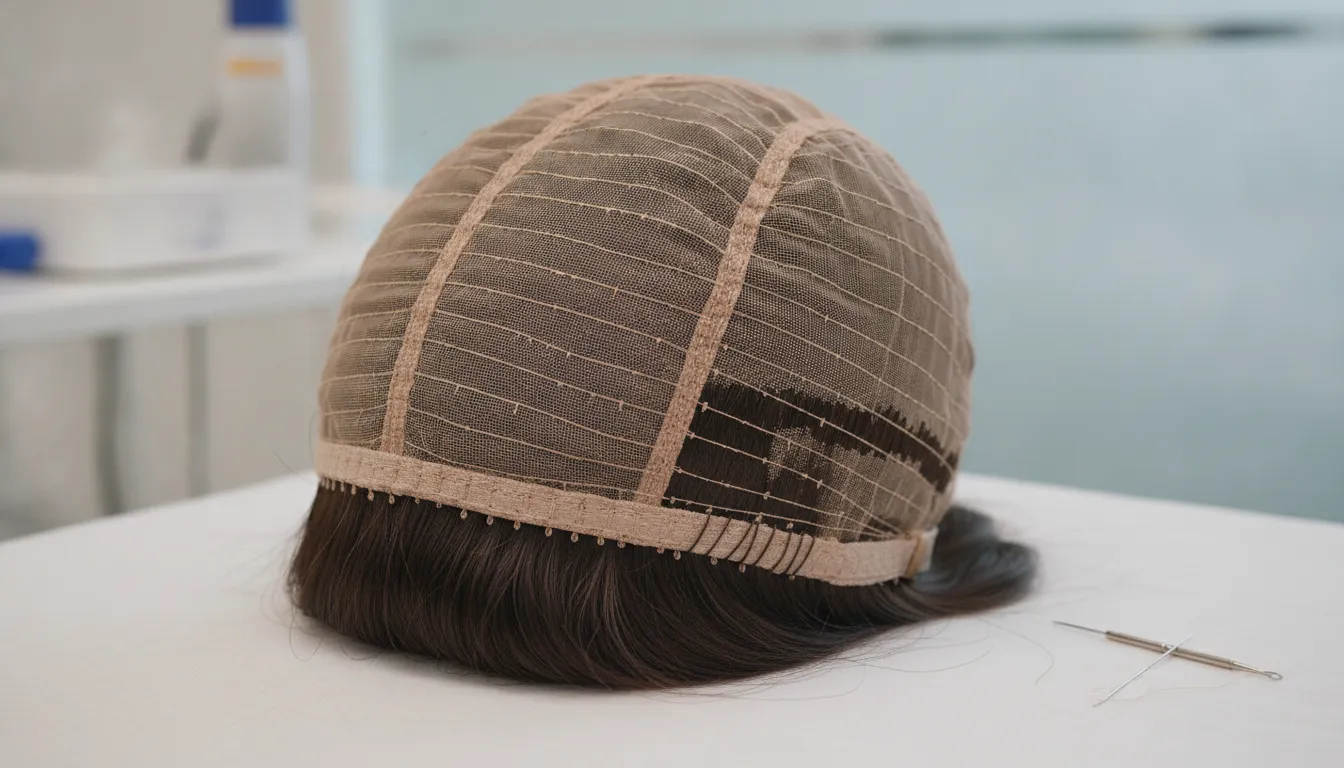
Medical-grade units cost more because of how they are engineered. They typically include a monofilament top or a lace front, which allows the scalp to breathe and creates the illusion that hair is growing directly from your scalp. For patients with tender scalps from chemotherapy, these soft components are essential. High-end units also feature hand-tied hair, a labor-intensive process requiring many hours to complete. These details ensure the piece stays secure and feels lightweight throughout the day. Review our sensitive scalp comfort guide for more information on medical-grade cap designs. Investing in a quality unit helps you feel more like yourself during a challenging time.
How Much Does a Cranial Prosthesis Cost? Breaking Down the Tiers
Cranial prosthesis costs fall into four tiers: basic synthetic ($500-$1,500), mid-range human hair or premium synthetic ($1,500-$3,000), high-end human hair ($3,000-$5,000), and fully custom human hair ($4,000-$7,000+). Your choice depends on your longevity needs, scalp sensitivity, and desired realism.
Pricing tiers for medical hair systems
The total cranial prosthesis cost varies significantly based on hair type and cap construction method. Most patients find that a quality unit costs between $1,500 and $5,000.
| Type | Price Range | Best For |
|---|---|---|
| Basic Synthetic | $500 - $1,500 | Short-term use, budget-conscious patients, temporary hair loss. |
| Mid-Range Human Hair / Premium Synthetic | $1,500 - $3,000 | Everyday wear with natural appearance. |
| High-End Human Hair | $3,000 - $5,000 | Long-term daily use, maximum realism, sensitive scalps. |
| Fully Custom Human Hair | $4,000 - $7,000+ | Unique scalp needs, exact color and fit specifications. |
For those who desire the most natural appearance, high-end human-hair units cost between $3,000 and $5,000. These pieces use the finest hair and are hand-tied for a soft, comfortable feel. If you have specific needs, a fully custom unit can range from $4,000 to over $7,000, precision-built to match your exact head shape and hair goals. While these prices may seem significant, many health plans provide partial or full reimbursement. As the Mayo Clinic notes, human-hair wigs tend to last longer than synthetic options with proper care, making them a cost-effective choice over time.
How cap design changes the price
The cap design is another major factor in the final price. The cap is the foundation of the unit that rests on your scalp. Machine-made caps keep costs lower, while hand-tied caps require more labor and skill. A monofilament top is a hallmark of premium units, using a fine mesh that mimics the appearance of natural scalp. This design allows you to part your hair in any direction. Lace front caps also add to the cost but deliver an invisible hairline at the forehead. Learn more in our complete guide to lace front cranial prostheses.
At NYC Medical Wigs, our Tribeca and Brooklyn collections feature hand-tied caps and monofilament tops. These designs keep the unit cool and lightweight throughout the day. We understand that comfort is just as important as appearance. During your private consultation in New York City, we can demonstrate how different cap styles feel so you can choose the right option for your daily needs.
Managing the cost of your medical unit
Purchasing a medical hair system is a significant health investment. Many patients are pleased to learn they can use HSA or FSA funds to cover these costs. Review our guide to using FSA and HSA for cranial prostheses for detailed information. You should also check with your health plan to determine whether they offer reimbursement. Most plans require you to pay the full amount upfront and then file a claim for reimbursement.
Our team guides you through each step of finding the right unit for your budget. We review your options during your visit to ensure you have all the information you need before making a decision. By selecting the right hair type and cap, you can find a unit that lasts and helps you feel confident.
Does Health Insurance Cover Cranial Prostheses?
Yes, many health insurance plans cover cranial prostheses when hair loss results from a medical condition. Medicare, Medicaid, BCBS, Aetna, Cigna, and United Healthcare may offer partial or full coverage with a doctor's prescription using the term "cranial prosthesis." Coverage varies by plan. And most require upfront payment followed by claim reimbursement.
Many health insurance plans may cover the cost of a cranial prosthesis when hair loss results from a medical condition. Because these units serve as medical devices, you can explore coverage through major carriers. Patients typically check for benefits through Medicare, Medicaid, and Blue Cross Blue Shield (BCBS). You may also find coverage options with Aetna, Cigna, and United Healthcare. For those in the military, Tricare covers one wig per lifetime when a doctor prescribes it for cancer-related hair loss, as BreastCancer.org reports.
Potential coverage and plan details
The amount an insurer reimburses depends on your specific policy. Some plans offer 80 to 100 percent coverage for a medical wig when you provide all required documentation. However, your final out-of-pocket cranial prosthesis cost depends on your deductible and out-of-pocket maximum. Call the number on your insurance card to verify your benefits, as the Mayo Clinic recommends. Ask whether your plan classifies a hair prosthesis as durable medical equipment (DME), as this designation affects your cost share.
In-network versus out-of-network care
Your choice of provider affects your out-of-pocket costs. In-network providers have negotiated rates with your insurance company, typically resulting in lower costs. If you choose an out-of-network specialist, you may face higher fees or a higher deductible. Some luxury medical wig providers in New York City may not participate in every network. Verify your UnitedHealthcare cranial prosthesis coverage or your specific plan's network before your visit. You may still receive reimbursement if your plan includes out-of-network benefits, though the reimbursement rate may be lower.
The pre-pay and reimbursement model
Most medical wig providers operate on a pre-pay model. You pay for the device in full at the time of your visit and then submit a claim to your insurance company for reimbursement. This differs from most medical visits where the provider bills the insurer directly. To receive reimbursement, you need a formal diagnosis and a prescription from your doctor. Ensure the documentation uses medical terminology such as "cranial prosthesis" rather than "wig" to support your claim. The National Alopecia Areata Foundation emphasizes that proper terminology is essential for insurers to recognize the device as medically necessary.
Can You Use FSA or HSA Funds for a Cranial Prosthesis?
Yes. Both Flexible Spending Accounts (FSA) and Health Savings Accounts (HSA) can be used to pay for a cranial prosthesis when a doctor prescribes it for a medical condition. These pre-tax dollars can reduce your effective cost by 20 to 40 percent depending on your tax bracket.
You can use a Flexible Spending Account (FSA) or a Health Savings Account (HSA) to pay for your medical wig. These accounts allow you to set aside pre-tax money, reducing your taxable income. Using pre-tax dollars can significantly lower your effective cranial prosthesis cost and is a smart approach to managing healthcare spending while obtaining the hair loss solution you need.
Using pre-tax dollars for hair loss
Most FSA and HSA plans recognize a cranial prosthesis as a qualified medical expense. Because a doctor prescribes the device for a diagnosed medical condition, it qualifies for these accounts. Check with your plan administrator to confirm whether your account covers medical hair loss solutions. Most account holders find that their funds cover the full cost of a premium unit.
The pre-tax benefit represents significant savings. When you use an HSA or FSA, you pay with money that has not been subject to income tax. This can reduce your effective cost by hundreds or even thousands of dollars. It makes premium human-hair prostheses more accessible for many patients in New York City. You can apply these funds toward both the device and the fitting process at our NYC office.
Flexible Spending Accounts typically require funds to be used by the end of the plan year. Health Savings Accounts roll over from year to year with no expiration. Both accounts offer an excellent way to manage the cranial prosthesis cost without straining your regular cash flow. Check your balance before scheduling your visit.
Required paperwork for reimbursement
To use your FSA or HSA funds, you will likely need a prescription from your doctor. Ensure the documentation uses the term "cranial prosthesis" rather than "wig." This medical terminology confirms the device as a medical necessity. Proper terminology on a prescription supports both insurance reimbursement claims and tax-free spending eligibility.
Keep your receipt from NYC Medical Wigs. Most account administrators require a copy of the receipt and the prescription to approve the disbursement. If you have questions about the process, read our comparison of direct billing versus reimbursement models. Having your documents organized in advance makes the process much smoother, and our team can help you gather the right paperwork during your visit.
Common items you may need to submit for reimbursement include:
- A prescription listing your medical diagnosis and the term "cranial prosthesis."
- An itemized invoice from NYC Medical Wigs.
- A copy of your paid receipt.
- A letter of medical necessity if your plan requires one.
How Do You Get Insurance to Cover Your Cranial Prosthesis?
To get insurance coverage for a cranial prosthesis, obtain a written prescription using the term "cranial prosthesis," verify your plan's benefits by calling member services. Purchase the unit, and submit a claim with all supporting documentation. Most plans require upfront payment followed by reimbursement.
Securing insurance coverage for the cranial prosthesis cost is a primary goal for many patients in New York City. While some plans cover the full amount, others offer partial reimbursement. Following a structured process ensures your claim is processed correctly. Understanding how your plan classifies these medical devices is the first step toward getting the assistance you need.
Verify your plan details
Start by checking whether your health plan covers hair loss-related devices. Call the member services number on your insurance card and ask specifically about coverage for a "cranial prosthesis" related to your diagnosis. Some plans impose annual caps on prosthetic device coverage, so understanding these limits before you purchase is important.
Ask about the different billing and reimbursement models your insurer uses. Most plans require you to pay for the unit upfront and then file for reimbursement. Direct billing to the provider is uncommon for cranial prostheses. Understanding this helps you plan your budget for your new medical hair piece. Our prescription checklist for cranial prostheses can help you prepare for this step.
Obtain a medical prescription
You cannot receive insurance reimbursement without a prescription from your doctor. Meet with your oncologist or dermatologist to discuss your hair loss. They must write a prescription using the terms "cranial prosthesis" or "hair prosthesis." The word "wig" should not appear on the form. As insurers may classify it as a cosmetic item and deny your claim.
The diagnostic code on your prescription matters as much as the terminology. Your doctor should include the appropriate ICD-10 code for your condition, such as alopecia or chemotherapy-induced hair loss. This documentation confirms to the insurer that the device is medically necessary rather than cosmetic. Keep a copy for your personal records. Our guide to medical wig consultations for cancer patients provides additional context on working with your medical team.
Follow the claim process
Obtaining reimbursement requires patience and thorough documentation. Unlike most medical visits, cranial prosthesis costs are paid upfront by the patient. As the National Alopecia Areata Foundation explains, you purchase your unit at your consultation and then submit a claim to your insurer. Follow these steps to file your claim:
- Obtain a written prescription from your doctor using the term "cranial prosthesis" with your diagnosis and ICD-10 code.
- Call your insurance company to confirm your deductible, out-of-pocket maximum, and specific coverage percentage for prosthetic devices.
- Purchase your medical wig and obtain a detailed receipt showing the provider's tax ID and itemized charges.
- Complete the claim form from your insurer and attach your prescription, receipt, and any letter of medical necessity.
- Submit the complete packet to the claims office and document the date and method of submission.
After submission, expect a processing period of several weeks. If your claim is denied initially, do not give up. You have the right to appeal with additional supporting documentation from your physician. Many patients find that a well-documented appeal results in a favorable outcome.
Why NYC Medical Wigs Is the Right Choice for Your Cranial Prosthesis
NYC Medical Wigs, led by cranial prosthesis specialist Jamiese Drax, offers medical-grade human-hair cranial prostheses through the Tribeca and Brooklyn collections. Patients benefit from private consultations, custom fitting, and insurance documentation assistance in a clinical, medically focused environment.
Choosing a provider for your medical hair loss needs is an important decision. NYC Medical Wigs stands as a premier destination in New York City for high-quality cranial prostheses. Led by Jamiese Drax, a skilled cranial prosthesis specialist, our clinic offers a private, clinical environment focused on your well-being. We do more than sell wigs. We provide comprehensive care in a medical setting where every detail is managed with precision. Book a private consultation to learn more about our services and collections.
Expert care and luxury collections
Our clinic offers two premier lines of medical-grade units: the Tribeca and Brooklyn collections. These luxury human-hair pieces are designed for individuals with sensitive scalps from chemotherapy or alopecia. Unlike standard wigs, these medical-grade devices prioritize comfort and natural appearance. The quality of materials and craftsmanship justifies the cranial prosthesis investment. Every piece meets rigorous standards for durability and aesthetics.
Our team recognizes that medical hair loss requires a fundamentally different approach than fashion styling. We use only the finest human hair to ensure a soft feel against your skin. Each unit is constructed to be lightweight and breathable. This focus on quality helps you feel more like yourself during a difficult time. By choosing a medical-first provider, you receive a device that is safe for your scalp and built to last. Explore our guide to medical wigs for alopecia for more information on how our collections address specific conditions.
Private consultations and custom fitting
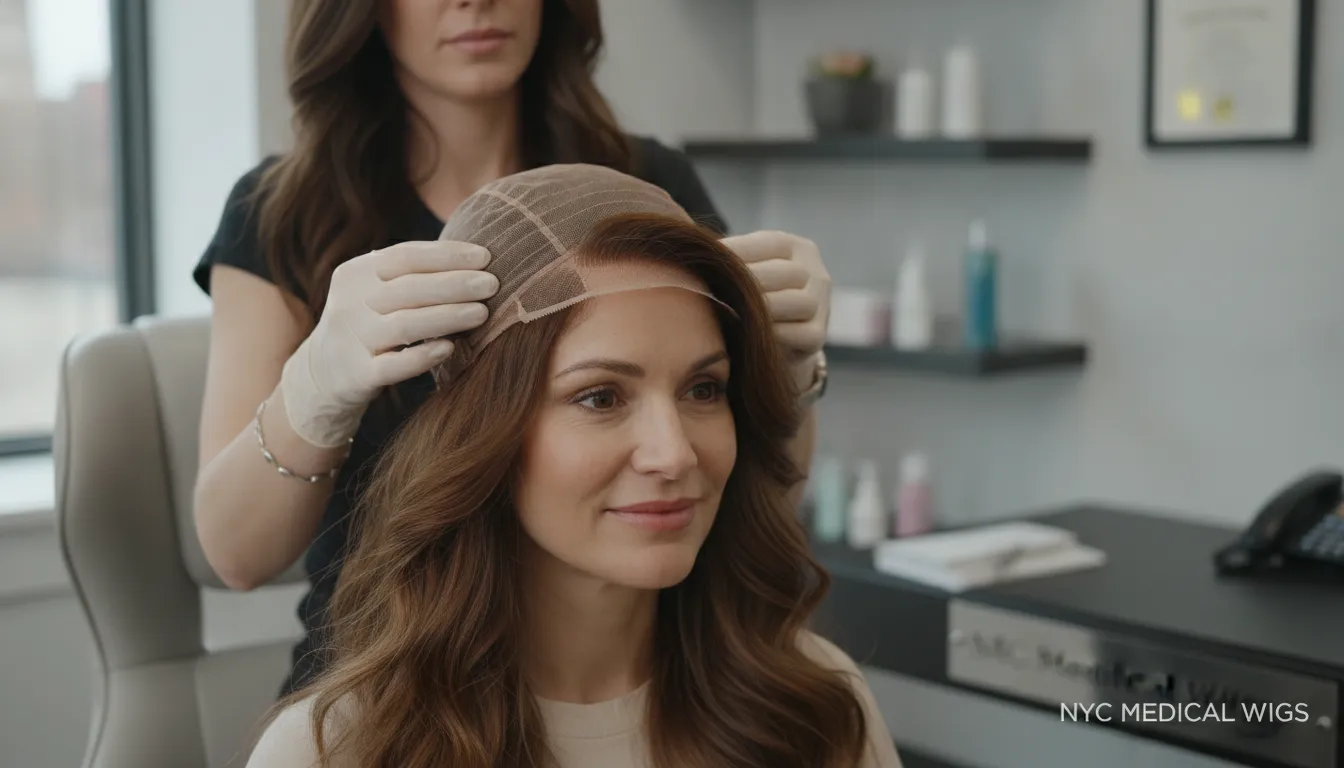
What can you expect during your visit? Our process begins with a private discussion in a quiet, comfortable room. During this time, we perform a thorough scalp assessment to ensure your prosthesis will fit properly without irritation. We also conduct precise color matching and cap fitting to create a look that is uniquely yours. This hands-on approach ensures your medical wig feels natural and secure. This level of expert care is essential for individuals with medical hair loss.
During the fitting, we evaluate your head shape and scalp condition to identify the optimal cap style for your needs. Whether you require a lace front or a full monofilament top, we guide your selection. Our goal is to ensure you leave with a piece that stays comfortable throughout the day. We also provide care instructions so your new hair system remains in excellent condition.
Schedule your appointment through our consultation booking page or learn what to expect in our cranial prosthesis consultation guide.
Insurance and financial support
We understand that the financial aspect of medical hair loss can feel overwhelming. NYC Medical Wigs assists you with the documentation required for claims and helps you understand billing and reimbursement models. While we cannot guarantee that your insurance will provide coverage, we provide the correct coding and terminology to support your claim. Many plans from BCBS, Aetna, Cigna, and United Healthcare may reimburse part or all of the cost. We also help you navigate FSA and HSA fund usage for your purchase.
According to the Mayo Clinic, a doctor's prescription is typically required when submitting a claim to your insurance company. We coordinate with your medical team to ensure the correct terminology appears on your paperwork. Using "cranial prosthesis" rather than "wig" is a critical distinction for your claim. Our staff guides you through each step of the process to help you maximize your health plan benefits. Visit our insurance information page for additional resources.
Frequently Asked Questions
How much does a cranial prosthesis cost?
The cost of a cranial prosthesis typically ranges from $1,500 to $5,000 for a quality medical-grade device. Basic synthetic options may start near $500, while high-end custom units can exceed $7,000. These prices reflect the medical-grade components and custom cap construction required for sensitive scalps. As Wig Medical notes, the final price depends on hair type, length, and level of customization.
What is the price difference between synthetic and human-hair cranial prostheses?
Synthetic cranial prostheses are typically the most affordable option, ranging from $500 to $1,500. Human-hair medical wigs cost more, generally between $1,500 and $5,000 for premium quality. While human-hair units require a larger upfront investment, they offer a more natural appearance and greater longevity with proper care. Research from the Mayo Clinic confirms that human hair is more durable, making it a preferred choice for long-term daily wear.
Does health insurance cover the cost of a cranial prosthesis?
Many health plans cover part of the cost of a cranial prosthesis when it is prescribed for a medical condition. Carriers including BCBS, Aetna, Cigna, and United Healthcare may offer reimbursement for these medical devices. Most plans require a prescription from your doctor using the term "cranial prosthesis" rather than "wig." As the National Alopecia Areata Foundation explains, patients typically pay upfront and then submit a claim for reimbursement.
Can I use HSA or FSA funds for a cranial prosthesis?
Yes, you can use Health Savings Account (HSA) or Flexible Spending Account (FSA) funds to pay for a cranial prosthesis. Because these units are classified as medical devices for diagnosed hair loss conditions, they generally qualify as tax-free medical expenses. A prescription from your doctor confirming the medical need is required. This approach lowers your effective cost by using pre-tax dollars. Always verify with your plan administrator for their specific requirements regarding medical hair loss claims.
How long does a cranial prosthesis last?
A well-maintained human-hair cranial prosthesis typically lasts 6 to 12 months with daily wear, while synthetic units may last 3 to 6 months. Proper care, including regular cleaning, conditioning, and professional maintenance, extends the lifespan of your unit. Our team provides detailed care instructions during your fitting to help you maximize your investment.
Ready to find the right medical wig for your needs?
Delaying your decision often leads to additional stress and longer wait times for a custom fitting. Taking the first step today gives you the peace of mind that comes with a personalized hair loss solution. Starting early also gives you time to gather the documentation needed for insurance coverage or HSA fund approval before you need the unit. Acting now removes uncertainty from your journey and allows you to focus on your health and recovery.
Book your private consultation today and take the first step toward a custom cranial prosthesis designed for your comfort, confidence, and peace of mind.