Wig Fitting Near Me: A Guide to Cranial Prosthesis Fittings
Medical hair loss can make an ordinary shopping trip feel unexpectedly personal. In New York City, the right cranial prosthesis fitting offers more than choosing a color or style. It creates space to discuss comfort, privacy, scalp sensitivity, and the changes your hair may experience.
If you are searching for a wig fitting near me, choose a cranial prosthesis specialist who takes precise measurements and adjusts the medical wig in person. This process helps the prosthesis sit securely, look natural, and remain comfortable throughout your day. An experienced specialist can also explain available cap constructions, securement options, and documentation that may support insurance questions.
At NYC Medical Wigs, Jamiese Drax helps patients and caregivers navigate this decision with compassionate, medically focused guidance. A private consultation can make the process feel more manageable, whether hair loss relates to chemotherapy, alopecia, lupus, or another condition. The fitting itself begins with a careful conversation, then moves through measurements, selection, and personalized adjustments that support your daily needs.
What Happens During a Wig Fitting Near Me
A medical wig fitting begins with a conversation about your hair loss, scalp, routine, and comfort concerns. During an in-person appointment, a cranial prosthesis specialist listens before recommending any specific construction or hair type. This approach keeps the experience focused on your medical needs, appearance, confidence, and daily comfort.
Consultation and scalp assessment
Your specialist reviews the cause and pattern of hair loss, including treatment-related changes or alopecia. They examine the scalp gently for tenderness, sensitivity, irritation, or areas needing additional protection. If chemotherapy has ended, hair may begin returning within two to three months, although texture and color can change. The National Cancer Institute explains that regrowth may initially appear finer or different from before.
Precise measurements for a secure foundation
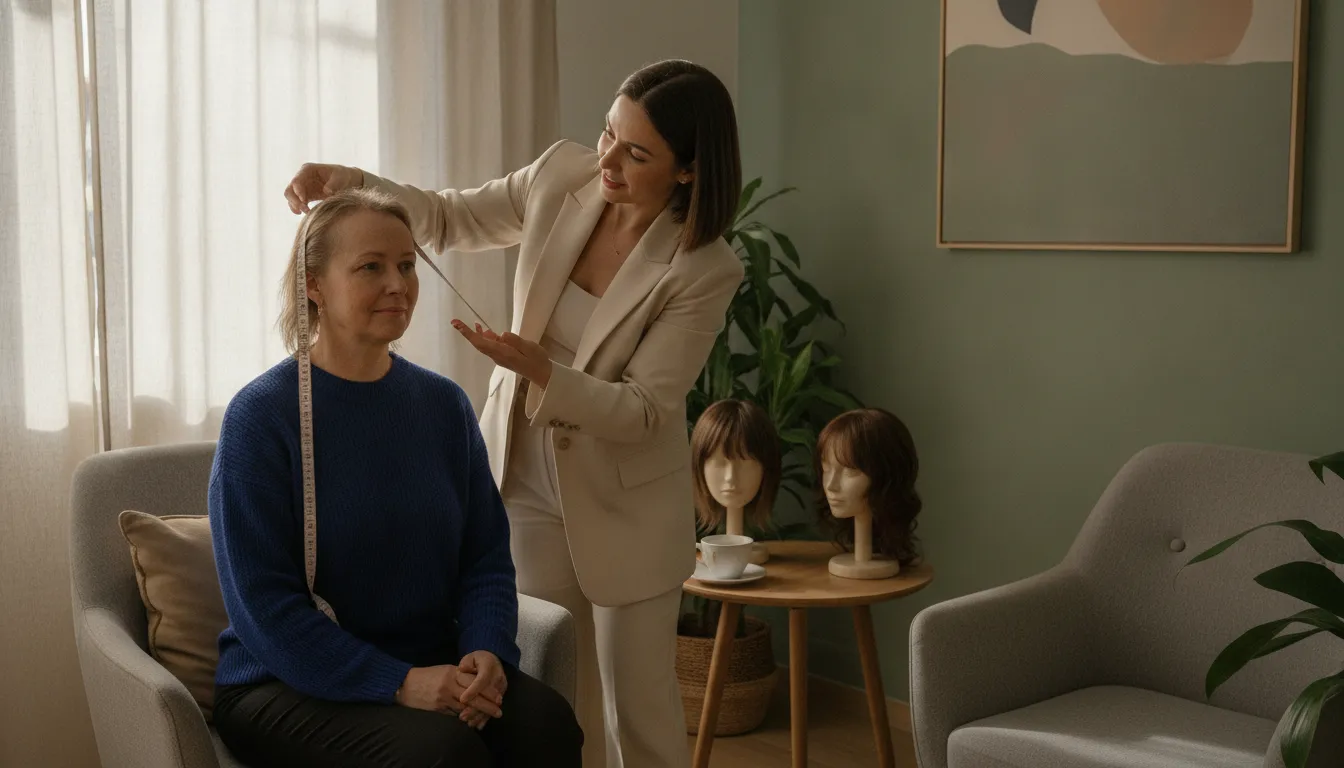
Next, the specialist records several measurements that determine how the cranial prosthesis sits on your head. These measurements help create a secure, natural, and comfortable fit tailored to your unique needs.
- Head circumference around the fullest part of the head
- Front hairline to the nape of the neck
- Ear to ear across the top of the head
- Temple to temple across the forehead
Accurate measurements matter because even small differences can affect pressure, movement, and the prosthesis hairline. Your specialist checks the base against your head rather than relying on a general size label alone.
Cap construction and hair selection
Once measurements are understood, you discuss cap construction, density, length, texture, and hair type. NYC Medical Wigs offers curated human-hair cranial prostheses, including lace-front and monofilament-top styles. The right option depends on scalp comfort, desired movement, maintenance expectations, and how you plan to wear it daily. For a closer look at how these bases compare, review this lace-front and monofilament comparison.
This conversation is not about choosing a fashion accessory. It is about selecting a medical hair prosthesis that supports your identity while meeting practical needs during hair loss.
Styling, application, and final adjustments
After selecting a suitable piece, the specialist positions it, refines the hairline, and styles it for a natural appearance. They adjust the fit so it stays secure without feeling excessively tight or creating pressure points. You can move, turn your head, and describe any slipping, pulling, itching, or irritation before leaving.
A proper wig fitting near me should end with clear guidance for daily securement and care. You should leave knowing how the prosthesis should feel, how to recognize discomfort, and when an adjustment may be needed.
Why an In-Person Cranial Prosthesis Fitting Matters
Buying online may seem convenient, especially when medical appointments already fill your calendar. However, a cranial prosthesis must fit your head, scalp, and daily needs precisely. In-person care gives a specialist the opportunity to assess comfort, placement, and security together. That attention can make the experience feel calmer and more manageable.
Precise measurement is the foundation of a secure, natural, and comfortable cranial prosthesis. Head shape, size, and hair loss pattern differ from person to person. A specialist can evaluate those details directly rather than relying on measurements you take alone. This is especially valuable for first-time users who may not know what fit should feel like.
An in-person appointment also allows careful adjustment of the strap and securement system. The goal is to prevent slipping without creating uncomfortable tightness around the scalp. Small changes can improve stability during walking, commuting, or ordinary household activities. You can describe pressure, movement, or tenderness immediately, while adjustments remain easy.
- Check whether the prosthesis stays stable when you turn your head or move naturally.
- Identify areas that feel tight, tender, itchy, or sensitive against your scalp.
- Adjust securement so the piece feels supported without unnecessary pressure.
- Confirm that the base sits smoothly and follows your natural hairline.
Natural appearance depends on more than selecting an appealing medical wig. The front edge must align with your natural hairline and sit correctly across your forehead. Professional adjustments help create a realistic transition while preserving comfort during daily wear. Seeing the result in person also lets you share honest feedback before leaving.
Scalp sensitivity deserves equal attention, particularly during treatment-related hair loss. A fitting should leave room to discuss tenderness, irritation, and pressure points openly. Your specialist can respond to those concerns through placement and securement adjustments. If something feels wrong, speaking up early helps prevent a difficult wearing experience later.
For patients navigating emotional hair loss, privacy and patience matter alongside technical skill. NYC Medical Wigs welcomes patients at its Bayonne, New Jersey showroom (347A Broadway), creating space for questions and personal concerns. You can learn how the prosthesis should sit, feel, and remain secure throughout your routine. That practical guidance supports confidence without minimizing the emotions involved.
An in-person fitting is not simply a final sizing check. It is a personalized process that connects precise measurement with comfort, security, and natural alignment. Those details help your cranial prosthesis support you through everyday life with greater peace of mind. If you are not yet sure whether a fitting is right for you, see what our cranial prosthesis consultation covers before you decide.
Choosing Between Lace-Front and Monofilament Cap Prostheses
Base design affects how a cranial prosthesis looks, feels, and performs during long-term medical wear. NYC Medical Wigs offers a curated selection of human-hair cranial prostheses, including lace-front and monofilament-top styles. The right choice depends on your scalp sensitivity, hairline goals, daily routines, and comfort needs.
These are medical choices, not fashion accessories. During a fitting, Jamiese Drax can assess how each base sits against your scalp and supports a natural appearance.
| Feature | Lace-front | Monofilament-top |
|---|---|---|
| Hairline realism | Creates a softly blended front hairline that can appear natural during close conversation. | Provides a realistic scalp appearance where hair is parted, especially across the top. |
| Breathability | Lightweight lace can allow airflow, depending on construction and the individual fit. | May provide comfortable ventilation while supporting a structured, secure base. |
| Scalp sensitivity | May suit patients who prefer a lighter front, though every scalp responds differently. | May feel reassuring for patients needing coverage across sensitive or exposed areas. |
| Ideal patient | Often considered by patients prioritizing a natural front hairline and flexible styling. | Often considered by patients prioritizing realistic parting and fuller top coverage. |
| Cost considerations | Pricing varies with human-hair quality, construction, customization, and fitting requirements. | Pricing varies with human-hair quality, cap construction, customization, and fitting requirements. |
How comfort and scalp health guide the decision
A breathable base and accurate fit can help reduce moisture buildup during regular wear. Patients receiving chemotherapy or other treatments may experience tenderness, itching, or increased scalp sensitivity. The National Cancer Institute notes that soothing lotions and conditioners may help when the scalp feels itchy or tender: National Cancer Institute scalp-care guidance.
Tell your specialist about tenderness, heat, sweating, or pressure points before choosing a base. A professional fitting also allows adjustments around the hairline, crown, and sensitive areas without making the prosthesis unnecessarily tight. For treatment-related scalp care, this sensitive scalp guidance may be helpful before your appointment.
Why human-hair construction and fitting work together
Human-hair cranial prostheses can be customized for a realistic color, movement, and overall appearance. However, premium materials cannot compensate for inaccurate measurements or an unsuitable base design. The fitting should evaluate your scalp, lifestyle, expected wear, and preferred level of coverage.
NYC Medical Wigs keeps the focus on medical comfort and personal dignity throughout this process. A thoughtful comparison helps you choose a cranial prosthesis that supports daily life, not merely appearance.
How to Prepare for Your Cranial Prosthesis Consultation
Preparing for a cranial prosthesis consultation can make an emotional appointment feel more manageable. A few thoughtful details help your specialist understand your needs, priorities, and daily routine. You do not need perfect answers, polished makeup, or extensive medical knowledge before arriving.
NYC Medical Wigs provides a private, secure space where you can discuss hair loss comfortably. Use this appointment to share concerns honestly, including sensitivity, uncertainty, and changes you notice. These preparation steps can help your consultation remain focused, personal, and supportive.
- Bring a photograph showing your hair before loss. Choose a clear image that reflects your preferred color, density, length, or texture. The National Cancer Institute recommends obtaining a wig while you still have hair, helping specialists match your natural color accurately. If treatment has already begun, several photographs from different angles can still provide useful guidance.
- Write down your treatment timeline and expected changes. Note upcoming chemotherapy, radiation, surgery, or appointments affecting your hair and scalp. Mention when shedding began, whether loss feels even, and whether regrowth has started. Your timeline helps the specialist discuss immediate comfort alongside longer-term prosthesis planning.
- Prepare your questions before the appointment. Consider asking about cap construction, securement, maintenance, styling, expected wear, and adjustment appointments. You might also ask how different materials could affect comfort during your regular activities. Bringing written questions prevents important concerns from disappearing during an understandably emotional conversation.
- Bring insurance information if it is available. Pack your insurance card, policy details, referral documents, or other paperwork connected with your treatment. Coverage varies by plan, so documentation requirements may differ between patients and insurers. Ask which records, measurements, or receipts could support your reimbursement or payment process.
- Describe your scalp sensitivity clearly. Tell your specialist about tenderness, itching, dryness, rashes, pressure points, or reactions to adhesives. Mention medications, recent procedures, and any areas that feel especially uncomfortable. Honest details help guide recommendations for materials, application, securement, and future adjustments.
- Bring comfort items and plan your travel gently. A familiar scarf, soft hat, water bottle, or supportive companion may help you feel more at ease. Wear comfortable clothing that does not add pressure around your neck or scalp. If traveling feels difficult, ask about virtual consultations or mobile services alongside showroom appointment options.
For a fuller overview of the appointment itself, review this cranial prosthesis consultation guide beforehand. Arrive with whatever information feels accessible, and let the specialist help organize the rest.
What to Ask at Your Wig Fitting Near Me Appointment
A fitting should give you clear answers about comfort, security, appearance, maintenance, and next steps. Bring every concern to the appointment, including questions about sensitive skin, daily routines, and emotional readiness. A thoughtful specialist will welcome these questions and adjust recommendations around your medical needs.
- Which cap construction suits my scalp and hair-loss pattern? Ask whether a lace-front, monofilament-top, or another cranial prosthesis design supports your comfort and desired hairline. NYC Medical Wigs offers curated human-hair cranial prostheses in lace-front and monofilament-top styles.
- How will you measure my head for a secure, natural fit? Precise measurements help tailor the prosthesis to your unique head shape. Ask how the measurements affect sizing, placement, comfort, and future adjustments.
- How will the medical wig stay secure during my normal activities? Ask about adjustable straps, grips, adhesives, or other options suitable for your scalp. The right approach should reduce slipping without creating pressure, tightness, or irritation.
- What density and hairline will look most natural for me? Ask how density, part placement, texture, and hairline design can reflect your previous appearance. Your specialist can explain which choices appear realistic while supporting comfortable daily wear.
- How long will the consultation and fitting take? A complete fitting is unhurried and tailored to your measurements, needs, and the number of prostheses you review. Ask the specialist for a realistic sense of timing so you can plan treatment appointments, transportation, or caregiver support.
- What documentation might my insurance plan require? Ask which diagnosis codes, prescriptions, measurements, invoices, or fitting notes may support a claim. Insurance documentation varies by plan, so coverage should always be confirmed directly with your insurer.
- What should I bring to help personalize my recommendation? Consider bringing photographs of your hair before loss, medical information, and insurance documents. These details can help your specialist understand your preferences and prepare accurate paperwork.
- How should I care for the prosthesis and my scalp? Ask about washing, drying, storage, replacement timing, and products appropriate for your materials. If your scalp feels tender or itchy, ask which gentle care options may provide relief.
- Can you show me how to apply, remove, and adjust it? Request hands-on instruction before leaving, then practice until the process feels manageable. Ask how to identify pressure points, slipping, or irritation that requires a professional adjustment.
- Can we discuss how I feel during this process? Hair loss can bring anger, sadness, embarrassment, or uncertainty, and those reactions deserve compassionate attention. A private medical wig consultation for cancer patients can create space for practical and emotional support.
You should leave understanding your options, expected costs, care routine, and the next fitting step. If an answer feels unclear, ask for an explanation before choosing your cranial prosthesis.
When to Schedule a Medical Wig Fitting
The best time for a medical wig fitting depends on your diagnosis, treatment plan, comfort, and expected hair-loss pattern. Scheduling early gives you space to compare cranial prosthesis options before decisions feel urgent. It also allows a specialist to measure your head accurately and plan a secure, natural, comfortable fit.
For chemotherapy, consider scheduling while you still have hair, especially if matching your current color matters. The National Cancer Institute recommends choosing a wig before hair loss so color matching remains more accurate. Hair often begins growing again two to three months after chemotherapy ends, although its texture or color may change.
An early fitting does not require you to wear the prosthesis immediately. It gives you time to understand your options, discuss attachment and comfort, and prepare emotionally. Patients often appreciate having a plan before treatment changes become visible or overwhelming.
Timing for chemotherapy and alopecia
If chemotherapy is approaching, ask about a fitting after your treatment schedule becomes clear. Your specialist can help you plan around anticipated shedding, scalp sensitivity, and the length of time you may need coverage. These details can influence the most comfortable base, fit, and maintenance approach.
With alopecia, timing may be less predictable because hair loss can develop suddenly or progress gradually. Schedule an appointment when you notice meaningful changes, increased shedding, or concern about upcoming loss. You do not need to wait until complete loss before receiving professional guidance.
- Schedule before chemotherapy when you want the closest possible color comparison.
- Schedule during early shedding when you need a secure option quickly.
- Schedule after diagnosis of alopecia when changes feel uncertain or distressing.
- Schedule a follow-up when hair regrowth changes the fit or your coverage needs.
Choose the appointment format that supports your health
NYC Medical Wigs offers in-person appointments at its Bayonne, New Jersey showroom (347A Broadway) and virtual consultations for patients with mobility needs or distance constraints. An in-person appointment can support precise measurement, professional adjustments, and immediate comfort checks. A virtual consultation may help you begin planning when travel, treatment, or distance makes visiting difficult.
Working with a cranial prosthesis specialist helps keep the process medically focused. For treatment-specific guidance, a medical wig consultation for cancer patients can address timing alongside your care journey.
Ask about documentation during the fitting
If you may seek insurance reimbursement, mention that before your appointment. Accurate fitting notes and documentation can support your request, but requirements and benefits vary by plan. Ask which records, prescriptions, or medical statements your insurer may require.
Beginning early leaves time to gather those materials without adding pressure. The goal is a fitting that supports your comfort, confidence, and practical needs throughout medical hair loss.
Frequently Asked Questions
What is a professional wig fitting?
A professional fitting uses precise head measurements to select and adjust a cranial prosthesis for comfort, security, and a natural appearance. Your specialist can assess the base, hairline, and daily needs before styling the piece. This process helps identify sizing concerns before you leave.
Why is an in-person wig fitting important for medical hair loss?
In-person care allows a specialist to account for your head shape, scalp sensitivity, and hair loss pattern. The prosthesis can be adjusted to reduce slipping, pressure, or irritation while creating a natural hairline. You also receive practical guidance for wearing and managing it confidently.
How long does a cranial prosthesis fitting take?
The appointment length depends on your measurements, needs, and the number of prostheses you review. Allow enough time for a private conversation, selection, fitting, styling, and adjustments. A careful appointment should never feel rushed, especially during an emotional period.
Can insurance help pay for a medical wig fitting or cranial prosthesis?
Some plans may provide benefits for a cranial prosthesis when medical necessity and documentation requirements are met. Coverage and reimbursement vary by insurer and plan. Ask what records, prescriptions, or fitting notes may support a claim before filing.
Do I need a wig fitting near me before buying a medical wig?
Yes, a fitting is worth scheduling whenever possible because a cranial prosthesis must fit your head, scalp, and daily needs precisely. An in-person appointment allows professional measurement, adjustment, and styling guidance. This reduces the risk of discomfort, slipping, or an unnatural appearance.